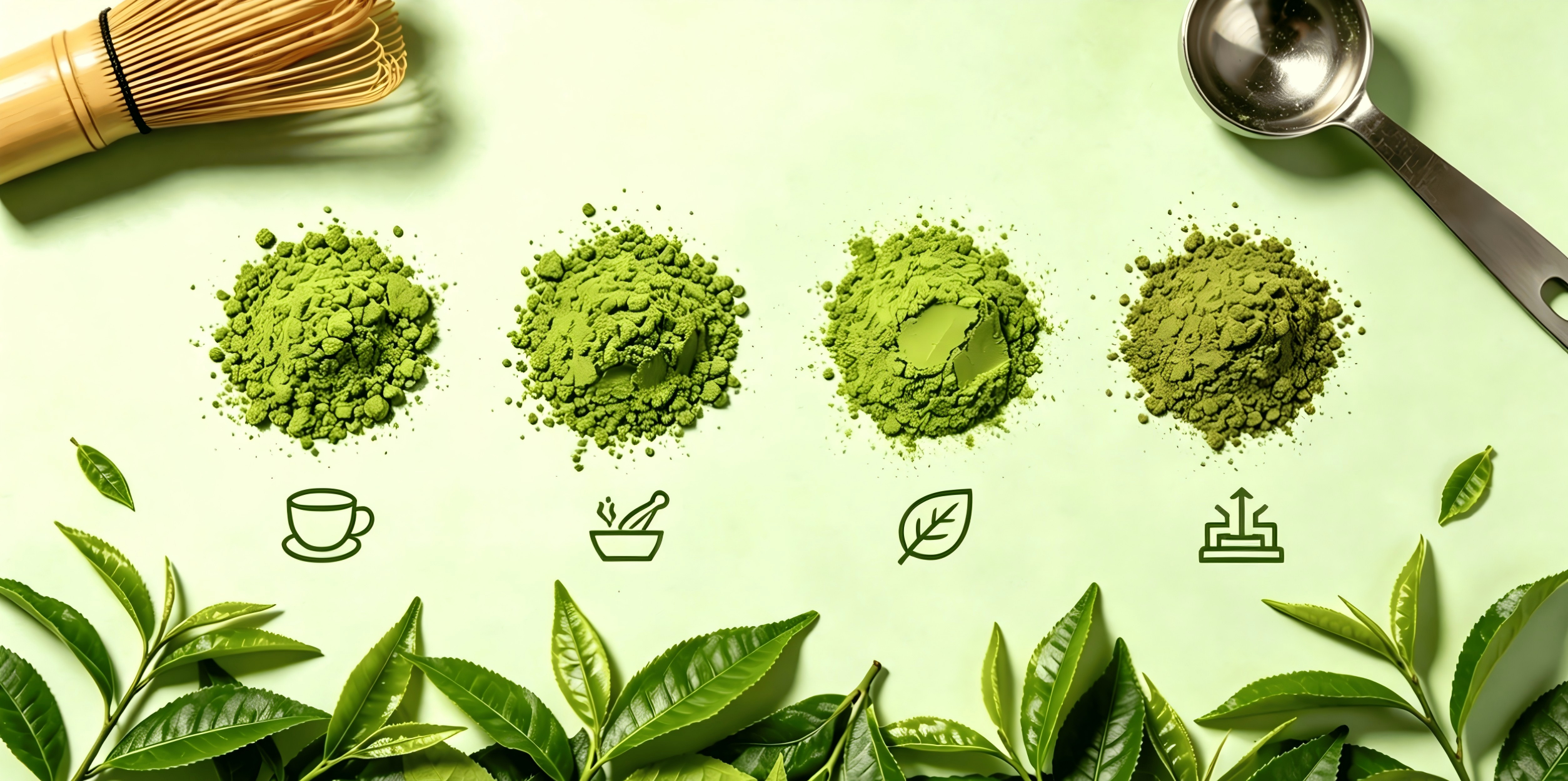
If you work with matcha powder, you’ve noticed that not all green is the same. Some matcha green tea shines bright emerald; others look dull, yellow, or brown. This difference isn’t just cosmetic – color is one of the most reliable indicators of matcha quality, freshness, and performance.
For brands using pure matcha powder in beverages, baked goods, skincare, or wellness powders, color directly impacts consumer perception. Vibrant green signals “premium” and “fresh”. Dull green raises doubts about how to identify high quality matcha powder. This guide explains why matcha color matters, what causes variation, and how to choose from our four tiers: ceremonial grade matcha, culinary matcha, organic matcha green tea powder, and industrial grade.
Color as a Quality Indicator
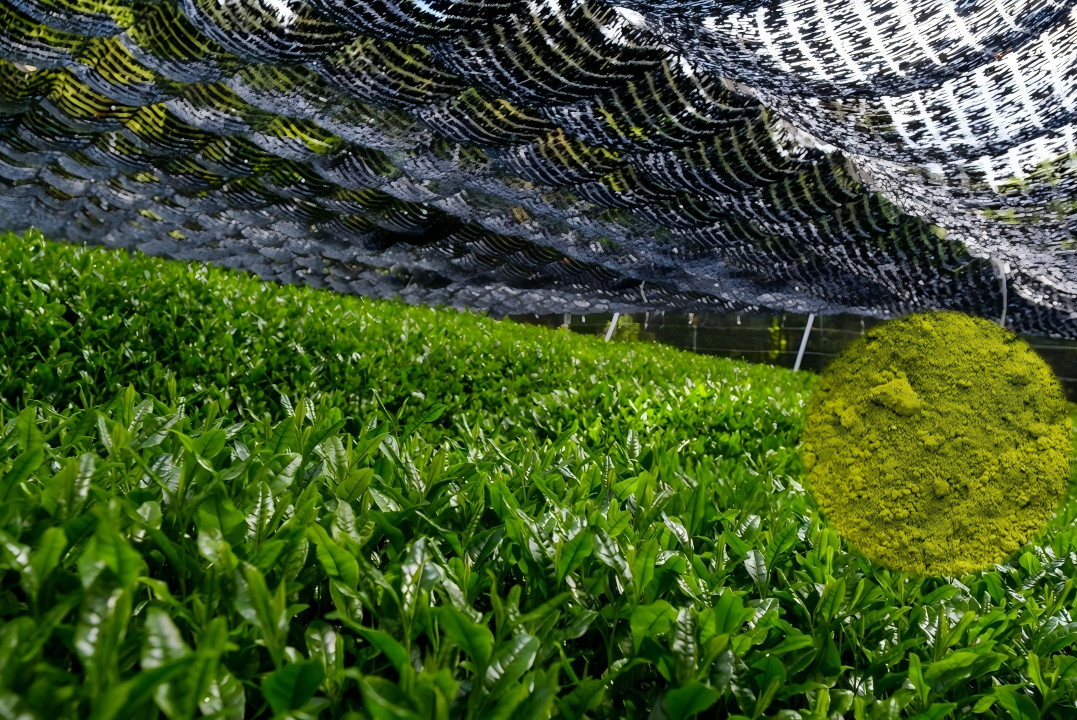
Matcha’s green comes from chlorophyll. High-quality matcha retains high chlorophyll because leaves are shade-grown for 3–4 weeks before harvest. This tencha process boosts chlorophyll and amino acids, resulting in a bright, intense green – a key sign of premium matcha tea.
Poor or aged matcha appears yellowish, brownish, or pale green – a sign of excess sunlight, oxidation, or improper storage. The greener the matcha, the better the quality – and the higher the price. Understanding ceremonial grade vs culinary grade matcha powder starts with color: ceremonial is neon-bright; culinary is bright but slightly less intense.
What Affects Matcha Color?
Several factors determine matcha’s final color:
Shade-growing: Longer shading (≥3 weeks) → deeper green.
Harvest season: First (spring) harvest → brightest green.
Grinding temperature: Slow stone grinding preserves color; overheating turns green to brown.
Oxidation: Air exposure turns bright green → olive → brown – this is the difference between bright green and dull matcha powder.
Storage: Light, heat, moisture accelerate fading.
Commercial takeaway: When sourcing bulk matcha powder, ask about harvest season, grinding method, and storage – these affect your product’s color stability.
The Color Spectrum: Our Four Product Grades
We classify matcha powder into four distinct grades by color, texture, and use
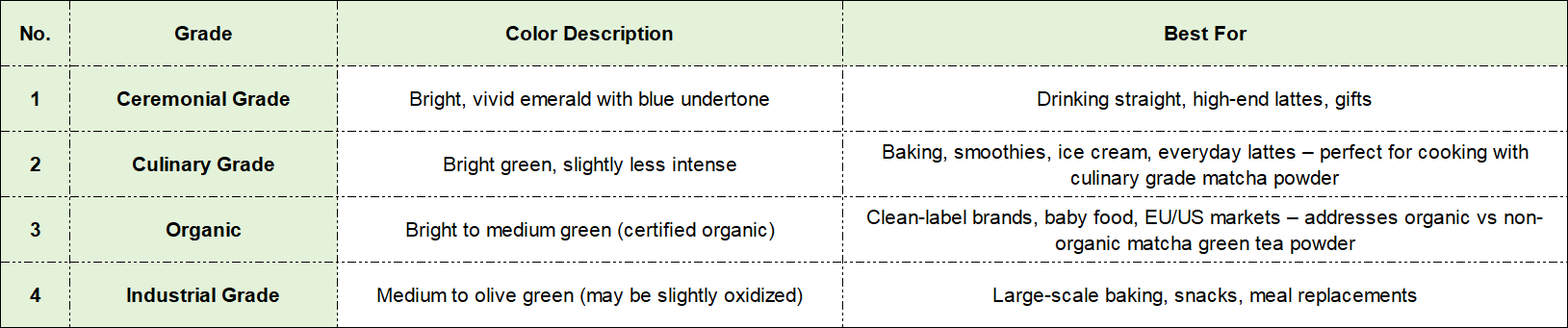
How to identify high quality matcha powder by color:
Ceremonial: neon-bright emerald, almost glowing – the best matcha powder for drinking.
Culinary: bright green, no dullness – ideal for matcha powder for ice cream and desserts.
Organic: similar to culinary + certification.
Industrial: acceptable green for bulk production where cost matters more than perfection.
Why Color Matters for Your Commercial Products
Consumer expectation: Customers expect beautiful green in lattes or cakes. Brownish drinks disappoint before the first sip – that’s why how to make matcha latte at home with powder requires a vibrant grade.
Natural coloring advantage: Pure matcha powder replaces artificial dyes. Vibrant green from ceremonial/culinary supports “clean label”. Industrial grade works where color is masked (chocolate bars, dark baked goods).
Flavor correlation: Bright green matcha tastes sweet, umami-rich, low bitterness – unlocking benefits of drinking matcha powder everyday like calm focus. Dull or brown matcha is bitter and astringent. For delicate products (white chocolate, dairy), choose ceremonial or culinary. For spiced chai or protein powders, industrial works well.
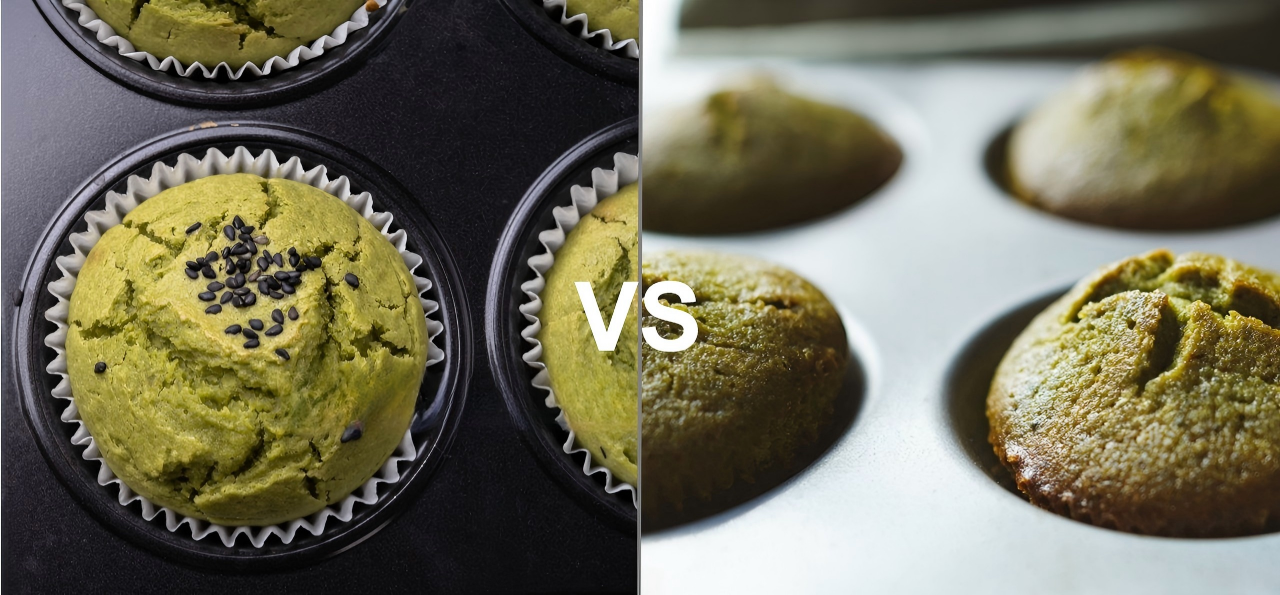
Shelf life & stability: Higher grades resist oxidation longer. Does matcha powder expire? Yes – after 12–18 months (unopened) or 6 months (opened), color fades and antioxidants drop.
Storage Tips to Preserve Green Color
How to store matcha powder for freshness (all grades):
Airtight: Use foil-lined bags or jars. Oxygen is the enemy.
Protect from light: Opaque containers or dark cabinets.
Cool and dry: 15–25°C (59–77°F). Refrigeration is better but requires airtight seal.
Use within 6 months after opening.
How to Select the Right Grade for Your Application
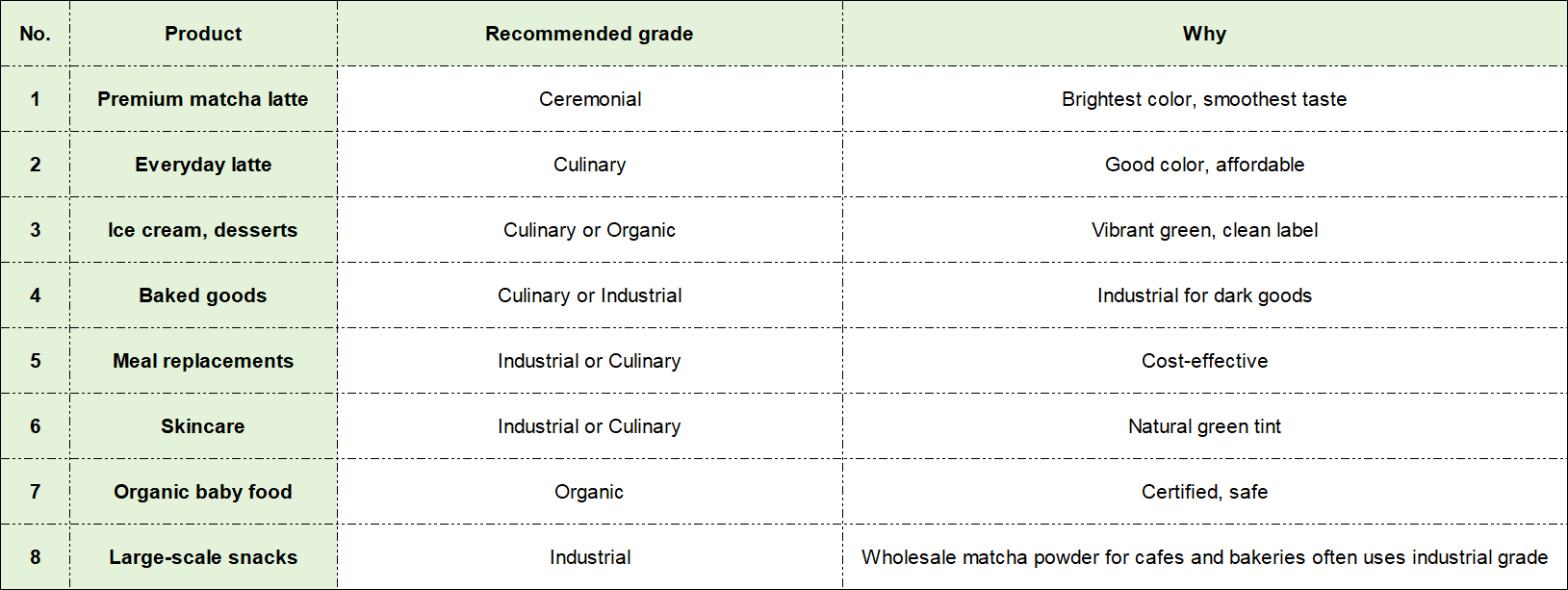
Tip: Always request a color reference sample and test in your actual formulation.
FAQ – Answering Your Questions About Matcha Color & Quality
Q: What’s the difference between bright green and dull matcha powder?
A: Bright green indicates high chlorophyll from proper shading and fresh grinding. Dull green suggests oxidation, old harvest, or heat damage.
Q: Is ceremonial grade vs culinary grade matcha powder just about color?
A: No – ceremonial is also smoother, less bitter, and more umami. Culinary is slightly bolder and affordable for recipes.
Q: Is matcha powder good for skin health?
A: Yes. Antioxidants in pure matcha green tea help fight inflammation. That’s why it’s used in skincare.
Q: Can you drink matcha powder with water only?
A: Absolutely. Traditional usucha is just matcha and hot water – requires high-grade ceremonial or premium culinary.
Q: Where can I buy bulk matcha powder at a matcha powder manufacturer direct price?
A: We offer factory-direct pricing on all grades. Request a quote below.
Conclusion
Matcha color reflects quality, freshness, and commercial value. Bright green delivers better flavor, more antioxidants in pure matcha green tea, and higher consumer appeal. Dull matcha disappoints.
As a professional matcha powder manufacturer, we offer four distinct grades:
Ceremonial Grade – Brightest emerald, premium taste
Culinary Grade – Bright green, versatile – perfect for matcha powder recipes for baking
Organic – Certified organic matcha green tea powder, clean label
Industrial Grade – Medium green, cost-effective for bulk matcha powder

We control shade-growing, spring harvest, slow stone grinding, and nitrogen-flushed packaging for consistent color across every batch. Factory-direct pricing – matcha powder manufacturer direct price for volume buyers.
Ready to source the best matcha powder for your needs? Contact us for paid samples, COA, color stability data, and wholesale quotes. We ship worldwide.
#matcha color #how to identify high quality matcha powder #ceremonial grade matcha #culinary matcha #does matcha powder expire #antioxidants in pure matcha green tea
Leave a Reply