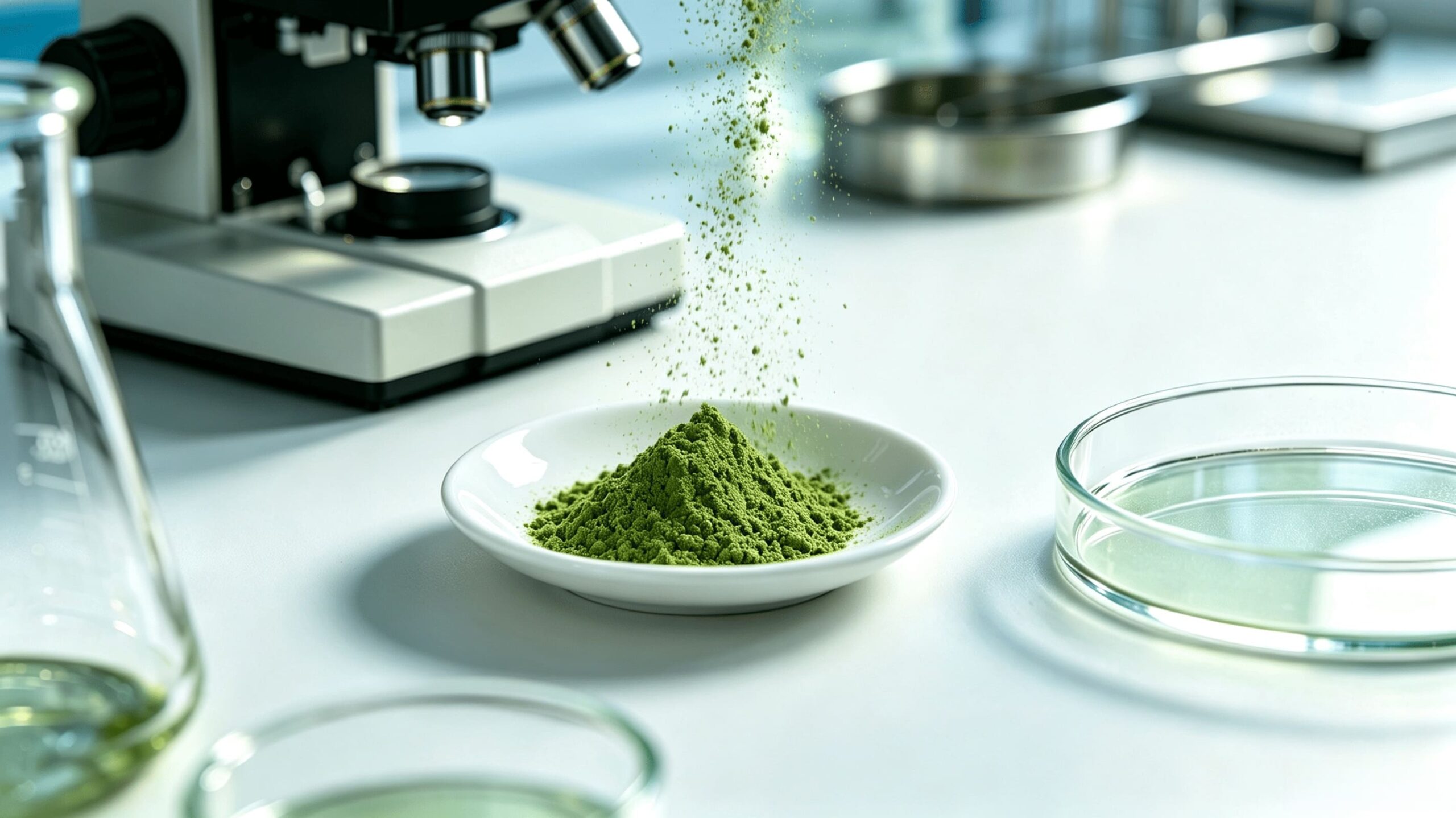
Matcha powder is showing up in more and more functional foods – baked goods, dairy products, energy drinks, and nutritional supplements. The key compounds behind this trend are EGCG, L-theanine, and polyphenols, all backed by solid research. But here’s the catch: different grades and processing methods produce very different compound levels.
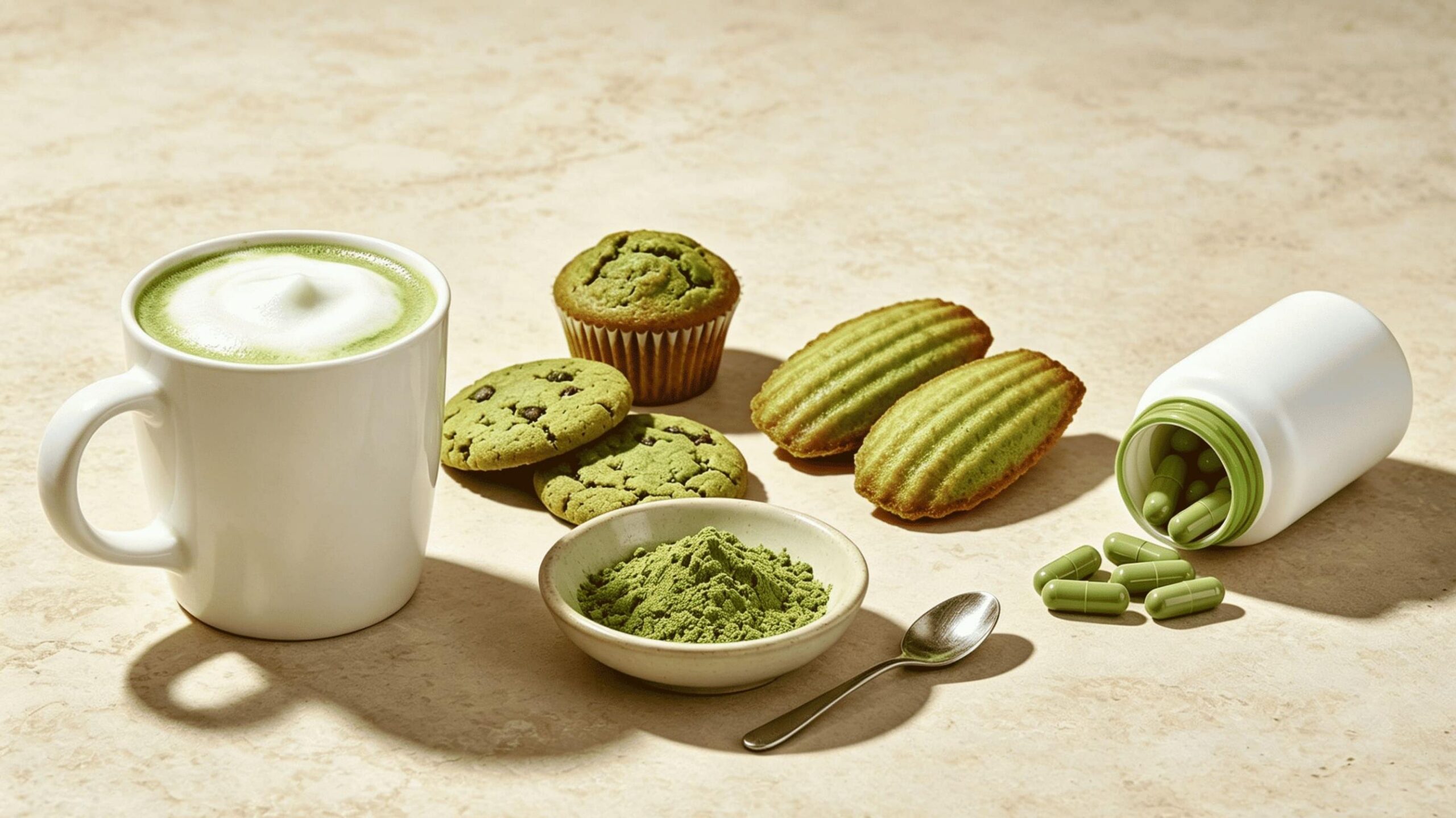
As a matcha powder manufacturing factory, we believe functionality starts with verifiable data. When sourcing matcha powder, buyers need to look beyond grade labels and focus on actual compound test results – that’s the only way to know if a matcha green tea powder fits your product’s needs.
What’s Actually in Matcha?
Matcha powder contains three main active compounds: catechins (mainly EGCG), L-theanine, and caffeine. Their combined effect is what makes matcha unique.
EGCG is the most abundant catechin in matcha and the most active among green tea polyphenols. Matcha delivers far more EGCG than regular green tea – one study found that drinking matcha provides 137 times more EGCG than steeped green tea. Polyphenols can account for up to 30% of matcha’s dry weight.
L-Theanine is a unique amino acid found in tea. Matcha contains roughly 9.30 to 28.51 mg per gram. Ceremonial grade matcha has over 1.8 g per 100 g dry weight of theanine. L-theanine is known for its relaxing, stress-relieving effects.
Caffeine is also part of the picture. Because matcha green tea uses young leaves, its caffeine content is higher than regular green tea. But unlike coffee, matcha’s caffeine works alongside L-theanine, delivering a “calm alertness” rather than a jittery buzz. This is a key reason why many are asking matcha vs green tea: which is healthier – the answer often comes down to this unique synergy.
What Do These Compounds Actually Do?
Cognitive Support
Multiple clinical studies back matcha’s effects on cognitive function. A 12-month randomized trial followed 99 older adults (60–85 years) with mild cognitive decline. Participants took either 9 capsules of matcha daily (equivalent to 2g powder) or a placebo. Results showed improvements in facial expression recognition, attention, and sleep quality.
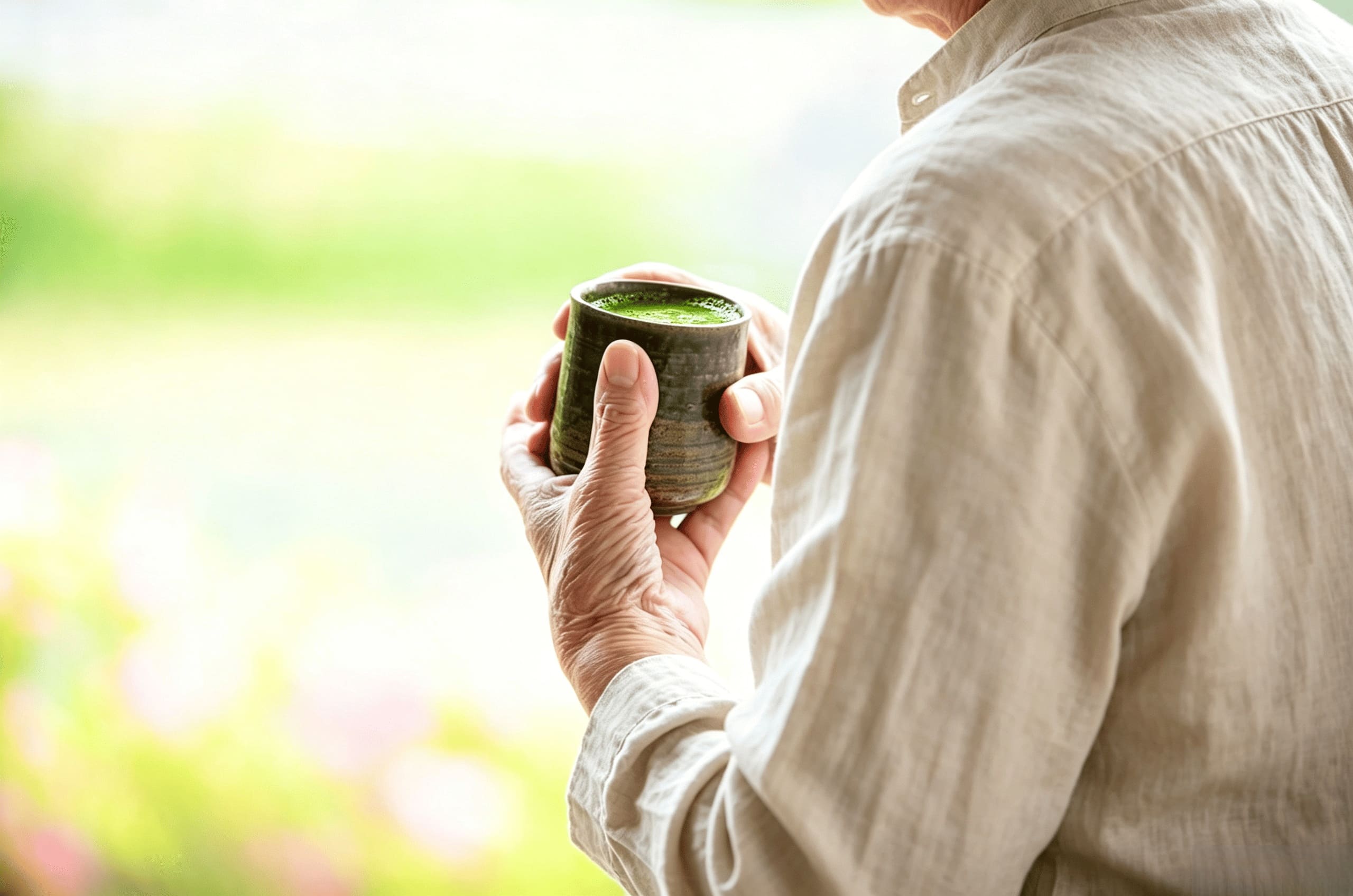
On a cellular level, EGCG activates antioxidant pathways, reduces inflammation, and works together with L-theanine and caffeine to support brain function. These benefits of drinking matcha powder everyday extend beyond cognitive health to overall well-being.
Stress Relief
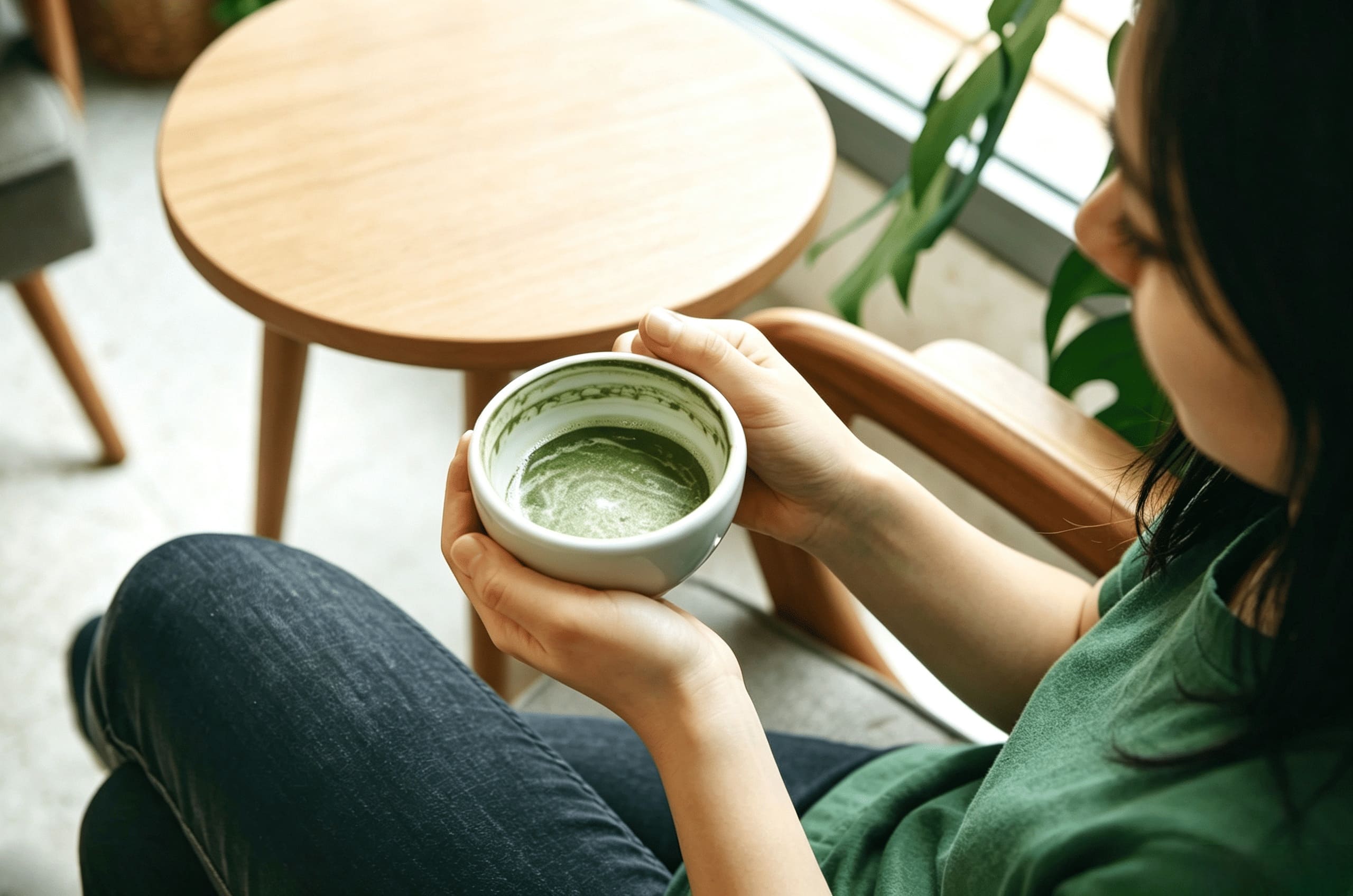
Whether matcha helps with stress depends on the ratio of L-theanine, caffeine, and EGCG. Studies show that theanine’s calming effects get weakened by caffeine and EGCG, but boosted by arginine. Both animal and human studies confirm that matcha reduces stress only when the ratio of (caffeine + EGCG) to (theanine + arginine) is less than 2. In one clinical trial with 39 participants, the matcha group had significantly lower anxiety scores than the placebo group.
Antioxidant Protection
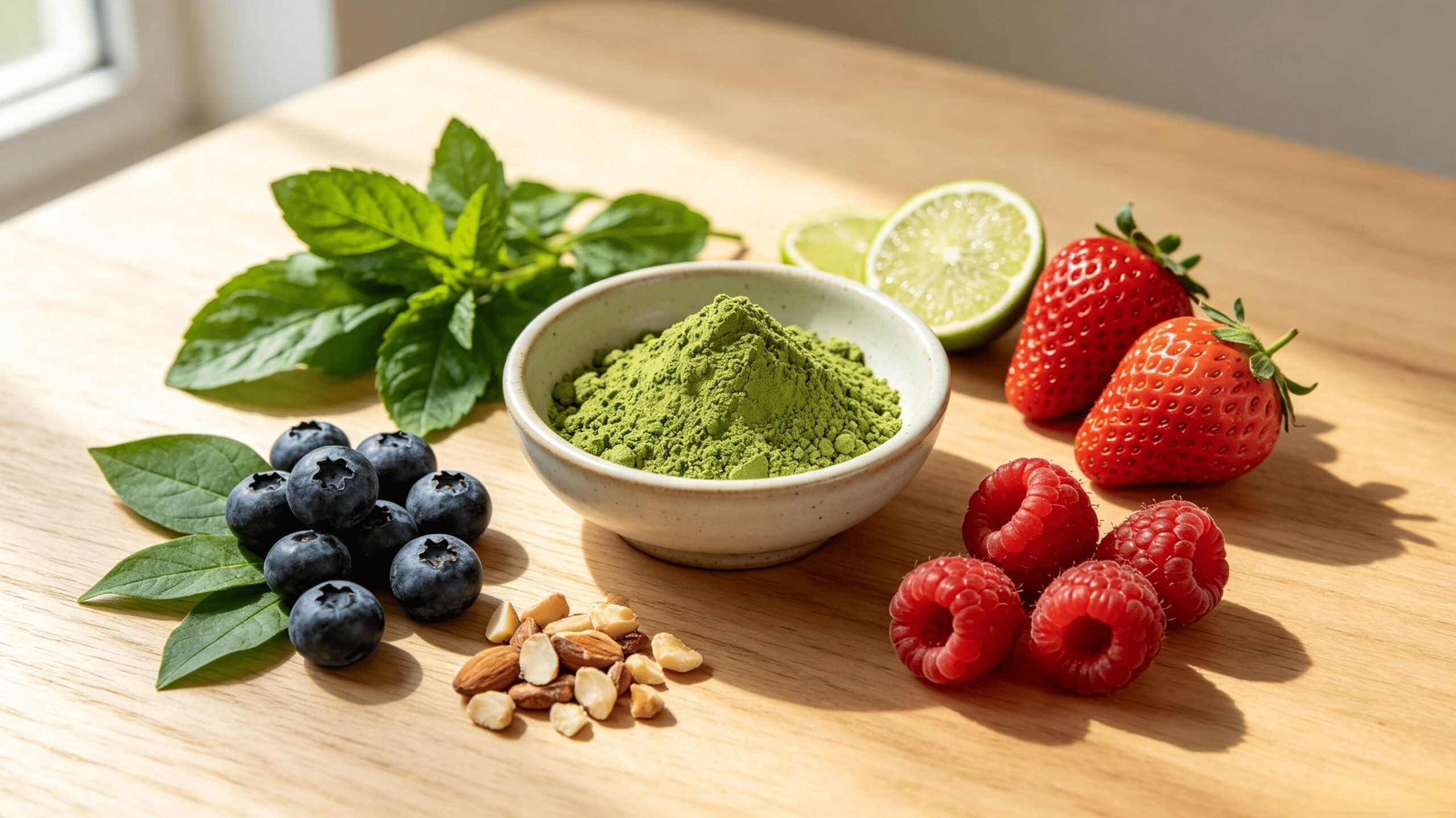
Matcha polyphenols provide strong antioxidant activity. Matcha’s ORAC value – a standard measure of antioxidant capacity – is about 1,253 units per 100 grams. The antioxidants in pure matcha green tea also quickly generate polysulfides, helping fight oxidative stress and inflammation. This is one reason is matcha powder good for skin health is a question more and more consumers and formulators are asking.
Metabolic Support
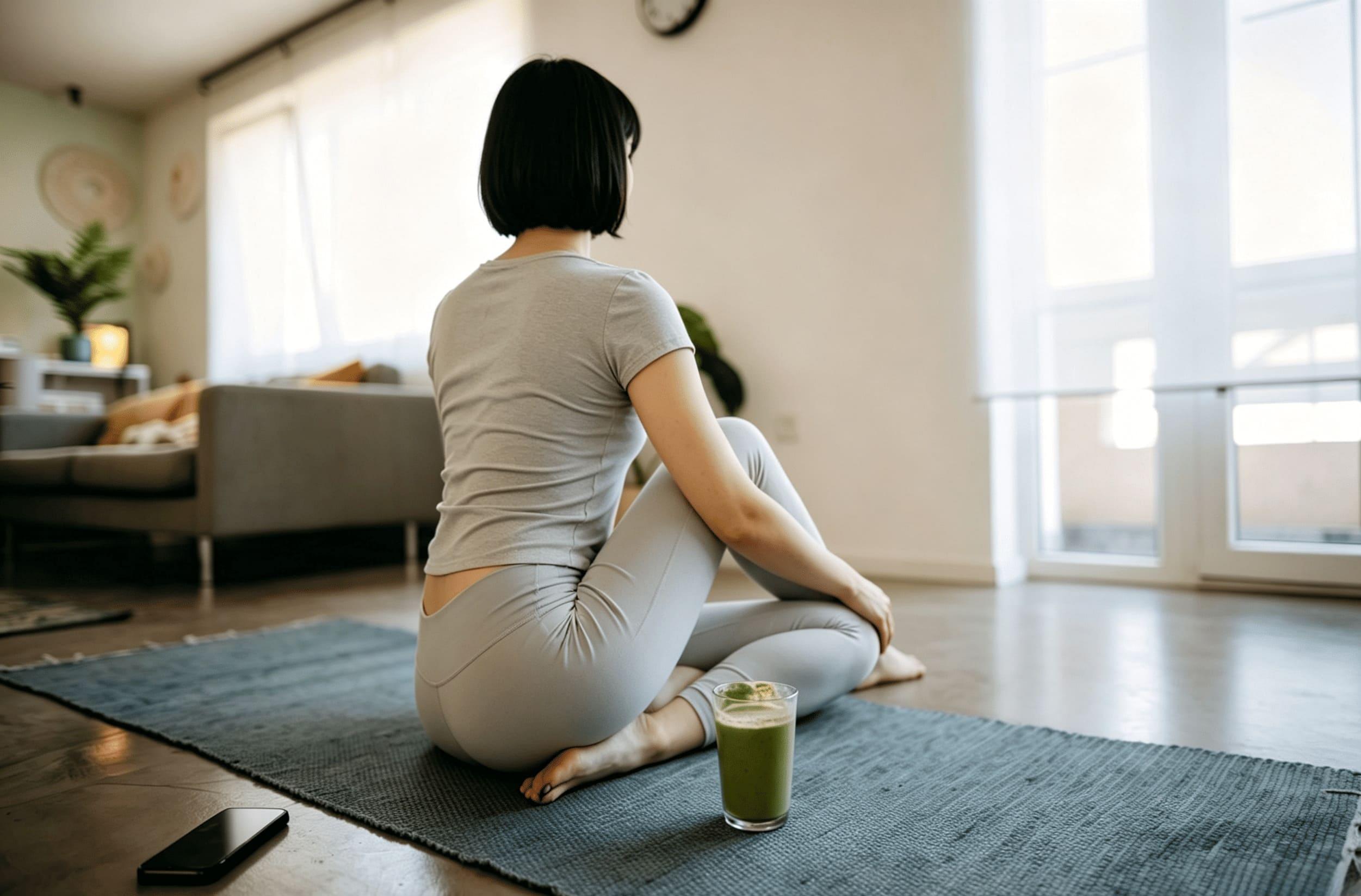
EGCG has been shown to support weight and body fat reduction in overweight individuals. This is why matcha powder for weight loss and energy has become a popular search term among health-conscious consumers. In type 2 diabetes patients, green tea compounds help cells respond better to insulin. Animal studies show that matcha treatment reduces glucose, triglycerides, and total cholesterol in blood and liver.
Does Higher Grade Mean More Functional Compounds?
Not necessarily. This is a common misconception: matcha grade and functional compound content don’t always go hand in hand. Understanding ceremonial grade vs culinary grade matcha powder is essential for making the right sourcing decision.
A study using HPLC to test 27 matcha samples found that premium grade had the highest EGCG concentration (19.28 mg/g), followed by culinary matcha (13.60 mg/g), with ceremonial grade matcha coming in lowest (8.19 mg/g). The study noted: “Contrary to popular belief, ceremonial-grade matcha did not consistently contain the highest EGCG levels. Matcha grade and price are not reliable indicators of antioxidant potency.”
Another study found similar results: less expensive culinary matcha had higher total phenolics and antioxidant capacity than ceremonial products.
What does this mean for you? Don’t assume “more expensive = more functional.” How to identify high quality matcha powder is not about price – it’s about understanding your specific needs. Choose based on your actual requirements:
High antioxidant needs (supplements, functional drinks) → Culinary matcha offers more EGCG for less cost
High theanine/relaxation needs (sleep aids, calming drinks) → Ceremonial grade matcha delivers the most theanine
Organic certification needs → Organic matcha green tea powder meets international standards while delivering consistent functional compounds
Large-scale industrial production → Bulk matcha powder ensures stable supply and cost efficiency for high-volume manufacturing
Cultivation and Processing Make a Difference
How matcha green tea is grown and processed directly affects its compound profile.
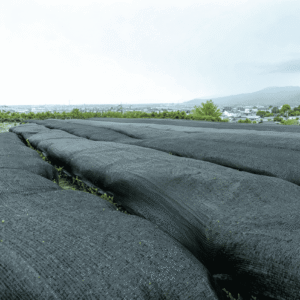
Shading is the key variable. Matcha tea plants are shaded for 2–3 weeks before harvest. Research shows that shading boosts free amino acids by 3.4 times, theanine by 3.7 times, arginine by 10.8 times, and caffeine by 2.0 times – but lowers total catechins (including EGCG).
This explains why ceremonial grade matcha often has lower EGCG than culinary matcha – ceremonial grade uses longer shading, giving more theanine but fewer catechins; culinary grade uses shorter shading or different leaf parts, preserving more catechins.
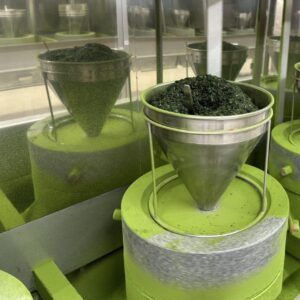
Grinding method also matters. Low-temperature grinding (like traditional stone milling) better protects heat-sensitive compounds like theanine and EGCG. That’s why our stone grinding process isn’t just about taste – it’s about preserving the functional compounds your product needs.
Practical Tips for Buyers
Here’s what to keep in mind when sourcing matcha powder
1. Match the grade to your functional goal
Need high EGCG? → Choose culinary matcha (better value)
Need high theanine? → Choose ceremonial grade matcha (maximum relaxation)
Need organic certification? → Choose organic matcha green tea powder (meets international standards)
Need bulk for industrial production? → Choose bulk matcha powder (stable supply, controlled costs)
2. Ask for compound test reports
EGCG content (mg/g)
L-theanine content (mg/g)
Total polyphenols
Caffeine (if you need to control it)
3. Check cultivation and processing details
Shading duration (affects theanine/catechin ratio)
Grinding method (low-temperature is better for heat-sensitive compounds)
Storage conditions (temperature affects catechin stability). Proper storage also answers the question does matcha powder expire or go bad – when stored correctly, it maintains its potency.
Conclusion: Functionality Needs Data, Not Labels
Matcha’s functional benefits have real scientific support – from lab studies to clinical trials. But under the single name “matcha,” products vary widely in their compound profiles.
Smart procurement isn’t about picking a grade – it’s about checking the data. That’s why we provide complete compound test reports with every batch of our matcha powder. So you can make decisions based on facts, not labels. Whether you need matcha powder manufacturer direct price information or bulk matcha powder for your production line, we’re here to help.
Contact us for samples and test reports – let the data guide your formulation choices.
#matcha powder #ceremonial grade matcha #culinary matcha #organic matcha green tea powder #bulk matcha powder #matcha green tea #matcha active compounds
Leave a Reply