As of June 2026, orders for premium Chinese matcha powder are commonly booked through 2027. Leading producers in Zhejiang and Guizhou confirm that current lead times range from 2 to 3 months, with some premium-grade orders requiring 12 to 18 months of waiting. Meanwhile, prices for high-quality Yabukita matcha powder have climbed from RMB 400,000 per ton in 2024 to RMB 580,000 in 2026 – a 45% increase over two years.
Orders booked through next year. Prices up nearly 50% in two years. This is not simple supply-demand tension. It is a structural mismatch between surging downstream demand and rigid upstream premium capacity.
As a matcha powder manufacturer, we see three questions on every B2B buyer’s mind: How do I secure supply during this crunch? How do I lock in reasonable pricing? How do I find a truly reliable long-term partner? In this article, we’ll break down the roots of this mismatch from a producer’s perspective – and offer actionable strategies that work.
Why Did Demand Explode?
Matcha demand is not driven by a single factor. Three forces are firing simultaneously.
New-style tea chains are doubling down. Among 42 major tea beverage brands tracked in 2025, 27 launched matcha green tea products – over 60% of the total. The year recorded 102 new matcha SKUs, with matcha’s share of all tea-based products rising from 6.3% to 7.6%. Luckin Coffee, Starbucks, and Chagee are all launching matcha green tea products monthly.
Retail channels are diving deep. In 2026, Hema launched a “Matcha Season” campaign. Its matcha bakery category saw sales grow 300% year-on-year, with procurement of Guizhou high-altitude matcha increasing fivefold. Walmart launched dozens of private-label matcha powder products spanning bakery, snacks, beverages, and sauces.



Export markets are exploding. In Q1 2026, Zhejiang’s matcha exports reached 1,241.97 tons valued at RMB 140 million – up 730% year-on-year. Orders are pouring in from 54 countries and regions.
Combined, B2B demand accounts for 70% to 80% of China’s total matcha consumption. With demand firing on all cylinders, supply has been pushed to its limit – which is exactly why many of our clients are now securing annual capacity well in advance.
Why Can’t Capacity Keep Up?
Why are orders booked through 2027 while producers can only meet 50% of demand? The answer lies in three structural rigidities across the matcha supply chain.
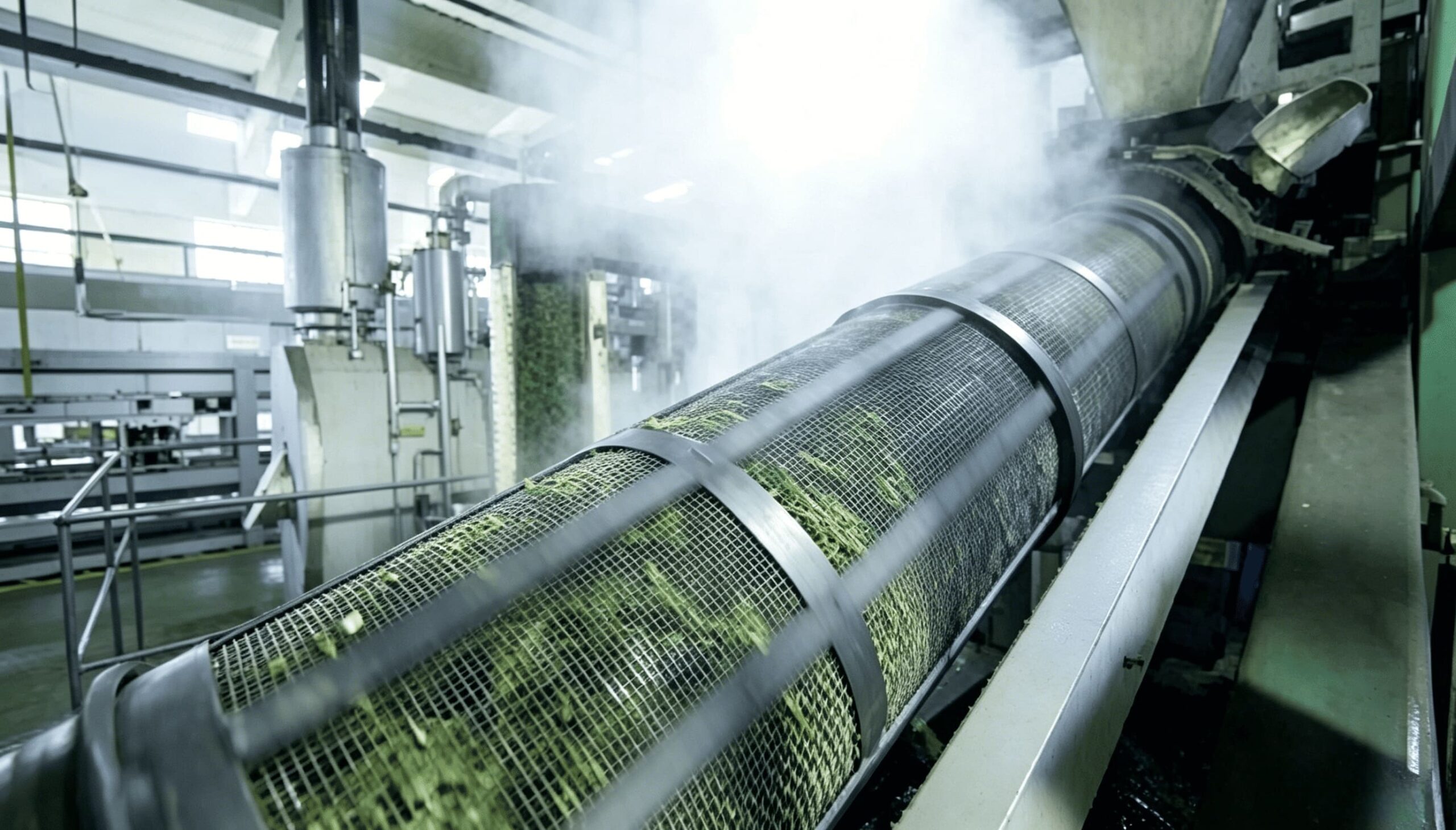
Lock One: Tencha production capacity. The core raw material for matcha powder is tencha – leaf tissue produced through shade cultivation, steaming, drying, and stem/vein removal. Capacity expansion here is painfully slow: shade cultivation requires 20-30 days of growth; new tencha production lines require heavy investment and long construction timelines. China has only about 120 primary tencha processing facilities nationwide, and most are running at full capacity. One Hangzhou-based organic food company produced over 1,000 tons in 2025 – up more than 80% year-on-year – but still only fulfilled about 50% of orders.
Lock Two: Grinding capacity. Premium matcha powder requires low-temperature grinding to preserve flavor and color. Traditional stone mills produce only about 40 grams per hour. Even with modern ultra-fine grinding equipment, capacity expansion is constrained by equipment investment and technical barriers. Grinding capacity and drying facilities are being stretched by unprecedented demand – there are no shortcuts, and investment takes time.
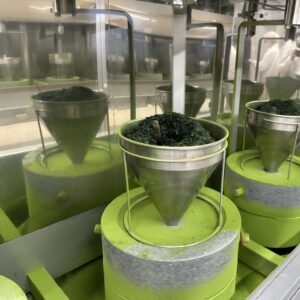

Lock Three: Scarcity of premium raw materials. Premium matcha tea demands specific cultivars. Yabukita, for example, has seen prices rise 45% in two years. Conventional green tea sells for just RMB 2.5/kg, while tencha fetches RMB 8 to 15/kg – the price gap itself quantifies the capacity bottleneck.
These three locks overlay create a structural contradiction: demand can explode overnight, but capacity cannot expand overnight.
For us, this also means a long-term commitment: we continue to invest in our tencha production lines and grinding equipment to ensure our capacity grows alongside our clients’ needs.
“Ultra-1000 Mesh” Is Making Premium Grades Even Tighter
In May 2026, China’s first premium matcha powder quality label, “Ultra-1000 Mesh,” was officially launched. The label uses fineness above 1000 mesh as its core quality indicator. Conventional matcha typically ranges from 500 to 800 mesh.
The “Ultra-1000 Mesh” standard is further widening the supply gap between premium and standard grades. Premium matcha tea now has a clearer quality benchmark, concentrating demand toward certified suppliers. But the capacity to consistently produce “Ultra-1000 Mesh” matcha powder is inherently limited.
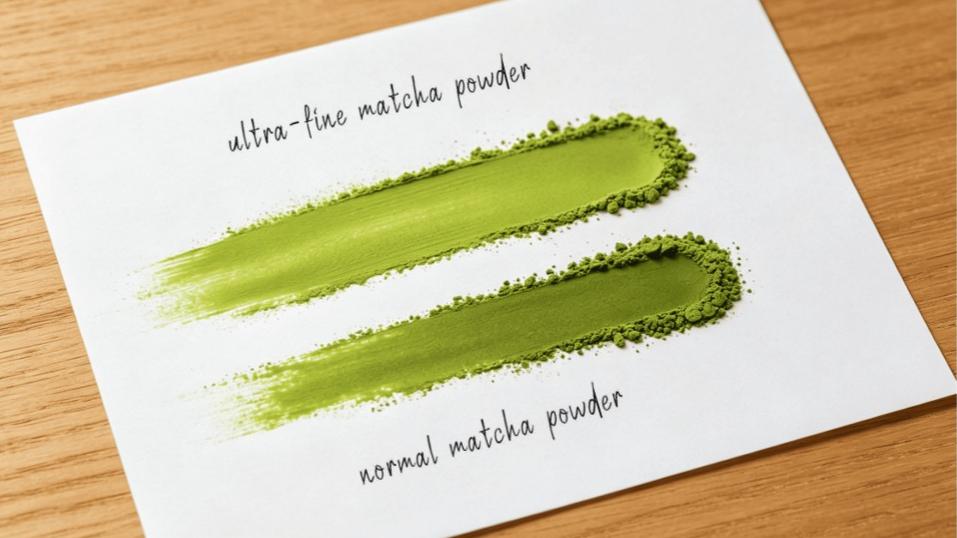
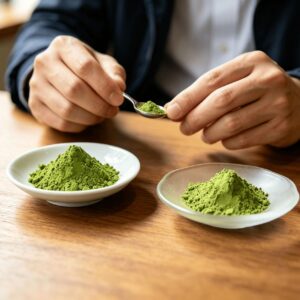
What does this mean for buyers? Understanding how to identify high quality matcha powder is more important than ever. Premium matcha will not become easier to source in the short term. Forward-thinking brands are already locking in relationships with factories capable of consistently delivering high-fineness matcha powder.
We are already capable of consistently producing matcha powder across the full fineness spectrum – from 600 mesh to over 1000 mesh – with every batch verified by laser diffraction particle size analysis to ensure distribution consistency.
Four Strategies for Buyers to Break Through
Faced with structural mismatch, buyers cannot afford to wait. Here are four actionable strategies.
Strategy 1: Plan ahead and lock capacity. Current lead times of 2-3 months are the new normal. We recommend developing annual procurement plans at least 6 months in advance, signing annual framework agreements with suppliers, and locking both capacity and pricing. A growing number of our brand clients are choosing annual agreements with us – this guarantees them stable supply even during peak shortages.
Strategy 2: Build a dual-source supply system. Many producers can currently only fulfill about 50% of orders. Relying on a single supplier is too risky. We recommend maintaining at least two core suppliers – and for buyers seeking bulk matcha powder for large-scale production, this diversification is especially critical.

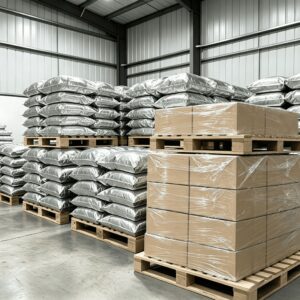

Strategy 3: Set safety stock and reorder points. With lead times of 2-3 months, we recommend safety stock covering at least 3 months of usage. With warehousing nodes in both Zhejiang and Guizhou, we can support our clients’ safety stock needs and shorten emergency replenishment lead times.
Strategy 4: Monitor regional capacity expansion. Tongren, Guizhou, now has over 100,000 mu of core matcha base, producing over 2,600 tons of tencha in 2025. Tracking these capacity expansion milestones helps buyers anticipate when supply conditions may improve. Our own tea gardens and partner farms are also expanding – our capacity will steadily increase over the next 12 months. For buyers seeking wholesale matcha powder for cafes and bakeries or other commercial applications, these capacity trends directly impact availability and pricing.
Conclusion: Structural Mismatch Is a Challenge – and a Watershed
The structural mismatch in today’s matcha market will not disappear overnight. Tencha line construction timelines, grinding equipment investment requirements, and premium matcha tea cultivation cycles – these rigid constraints mean matcha powder supply cannot increase substantially in a matter of months.
But challenges also bring opportunities. Buyers who lock capacity early and build stable supplier relationships will be the biggest beneficiaries of this industry upgrade.
We offer more than just matcha powder – we offer a dependable supply commitment. From our own tea gardens to intelligent tencha production lines, from low-temperature grinding equipment to full-panel testing on every batch – we ensure consistent quality and reliable delivery on every order. Whether you need pure matcha powder for clean-label applications or bulk matcha powder for industrial production, we have the capacity and expertise to deliver.
Contact us to learn about our capacity planning and supply capabilities. Let our stable quality and reliable delivery make us your most trusted matcha powder supplier.
#matcha powder #premium matcha tea #bulk matcha powder #pure matcha powder #matcha powder manufacturer #wholesale matcha powder for cafes and bakeries
Leave a Reply