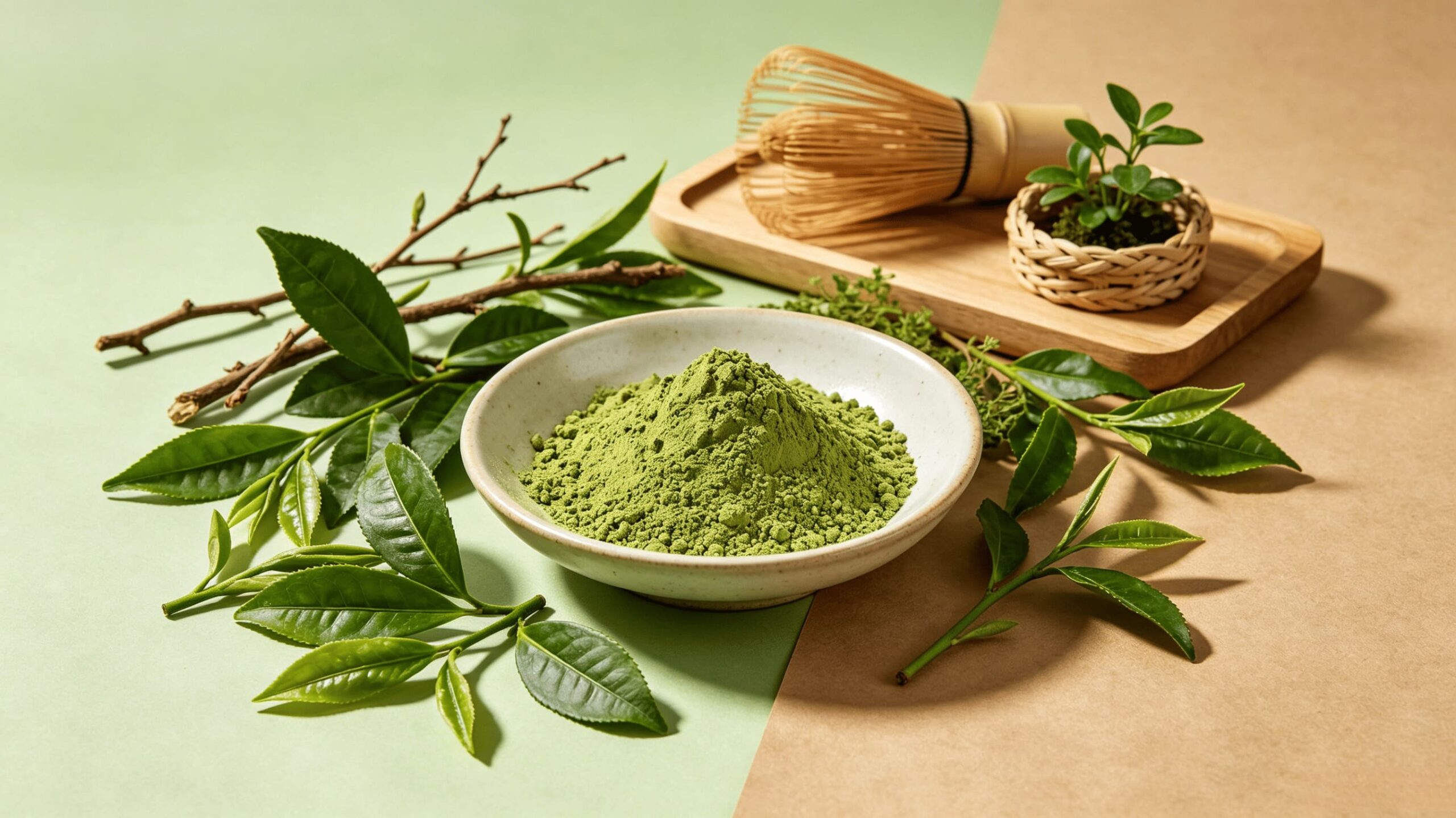
The global matcha market keeps expanding. The industry’s future depends on product quality. But it also depends on how we treat every leaf and every drop of water.
As a matcha powder manufacturer, we believe great products must pass quality checks. They must also pass environmental scrutiny.
Last month, we hosted a sustainability exchange program. Clients came from European tea brands, North American food companies, and Southeast Asian supplement firms. They were sustainability leads, ESG procurement managers, and supply chain directors. The goal was clear: show them our sustainable practices across the matcha value chain.
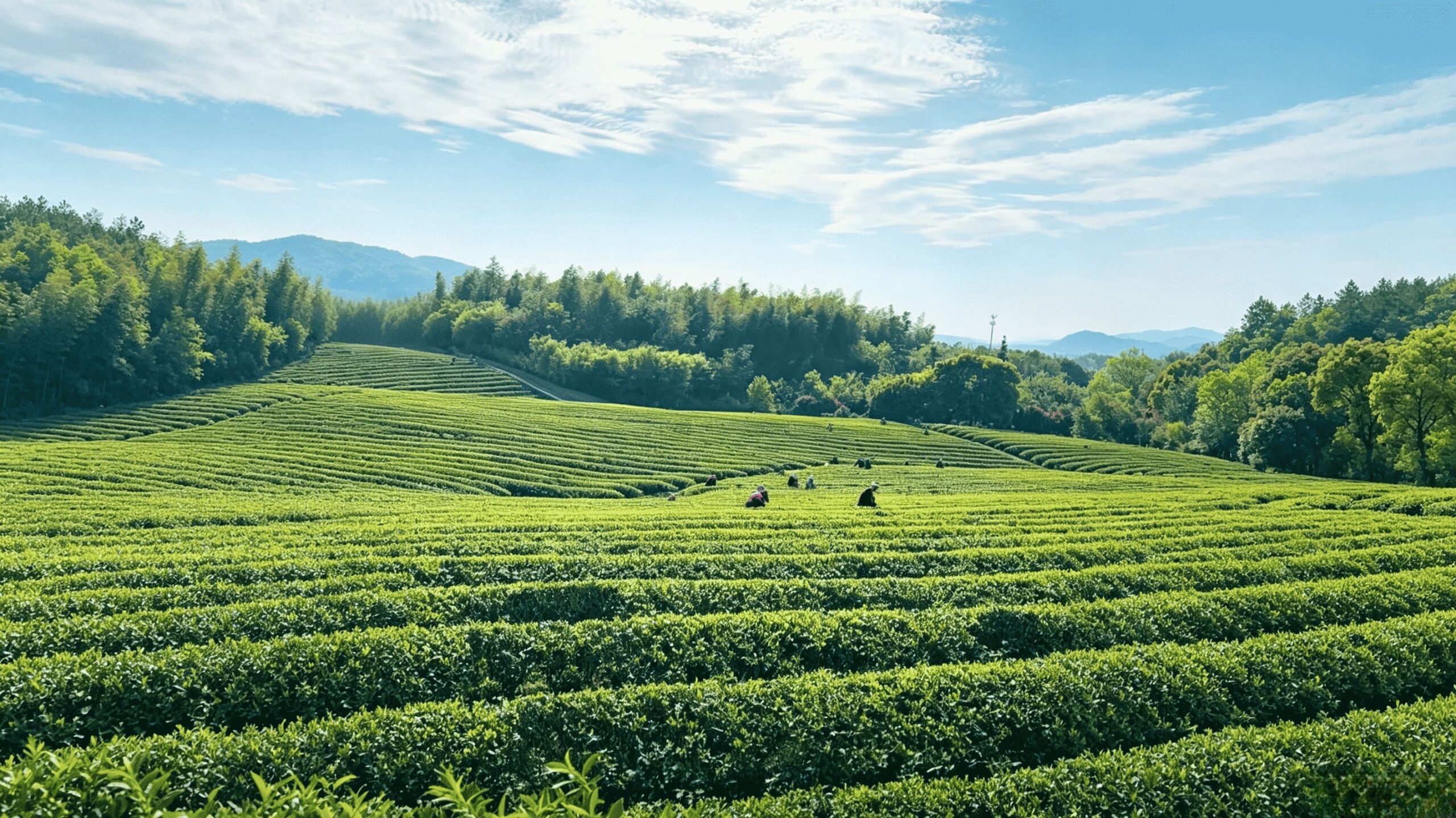
They saw how we manage waste, conserve water, and measure carbon footprint. They also observed our ecological cultivation practices in action. More importantly, they witnessed firsthand how these sustainable efforts directly improve our matcha powder quality.
Production Waste
Matcha production creates many by-products. The process includes steaming, drying, and stem removal. Stems and veins make up a large part of fresh leaf weight.
Making 1 kg of tencha requires 30-40 kg of fresh leaves. Stems and veins are usually treated as waste. Stone grinding also creates powder residue and sifted powder. These materials don’t meet first-grade standards due to particle size or color issues. They may look like waste. But they contain rich umami and aroma compounds.
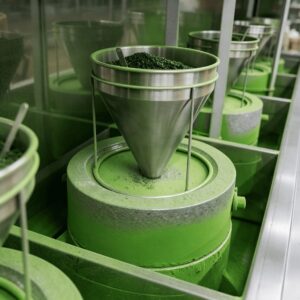
How we handle by-products shows our attitude toward resources. It also proves our matcha quality is stable. A factory that values every leaf values every batch.
Valorizing By-Products
Matcha “waste” is now “by-products.” This reduces disposal costs and creates new value. Better yet, efficient by-product use means our main product gets better grading and purer quality.
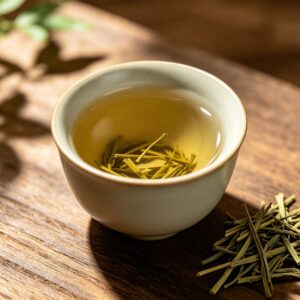
Stem tea. Tea stems from de-stemming can make stem tea. Stems have fewer bitter catechins. They are rich in L-theanine. This makes them sweeter and more umami. Stem tea costs less than regular sencha. Supply is stable. It is now used in commercial blends and gift teas.
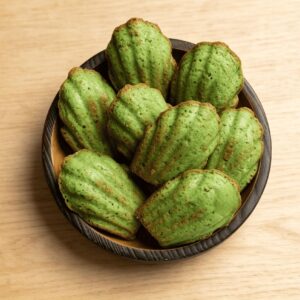
Powder residue and sifted powder. Bakeries and confectioneries want these materials. They work well in cookies, madeleines, matcha latte bases, and ice cream. They deliver good matcha flavor at lower cost.
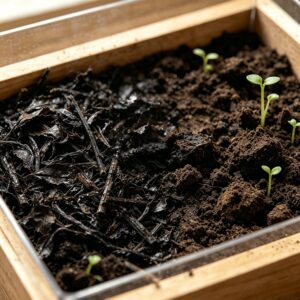
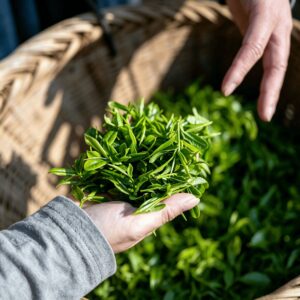
Agricultural recycling. Pruned branches and tea residue become organic fertilizer or eco-friendly materials. These go back to the tea garden. This “garden-to-garden” cycle reduces our need for external fertilizers. That means our matcha powder comes from purer, more sustainable soil.
Summer and autumn tea. Traditional matcha uses only spring tea. Now we also use summer and autumn leaves. This expands our supply. It also makes our matcha more competitive on price and capacity. To learn more about how low-temperature grinding unlocks the potential of summer-autumn tea, read our dedicated article: Low-Temperature Grinding: Unlocking Summer-Autumn Matcha.
Water Management
Water footprint is a key sustainability metric for agriculture.
Matcha uses much less water than coffee. This is our category advantage. Making 1 kg of green tea needs about 8,856 liters of water. The same amount of coffee needs 19,000 liters. Per cup: a 7g coffee uses 140 liters. A 3g green tea uses only 34 liters.
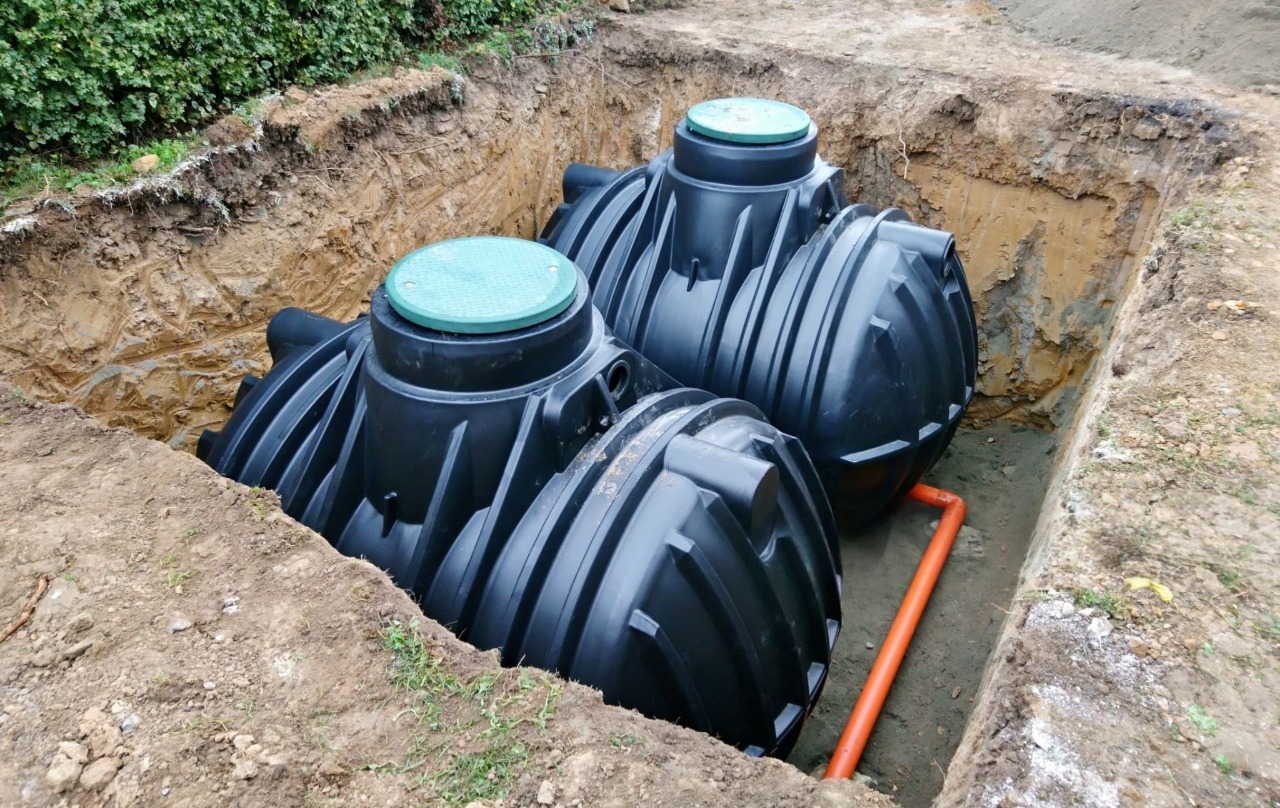
We keep improving water use:
Processing efficiency: We optimized tencha equipment to reduce water use.
Rainwater harvesting: We collect rainwater at our factory. This cuts reliance on municipal water.
Wastewater treatment: Treated water goes back to cleaning and non-production use.
These measures cut our costs. Clients benefit from the savings.
Carbon Footprint & Ecological Cultivation
Matcha’s carbon footprint is also much lower than coffee’s. Research shows: 1 kg of green tea produces about 1.9 kg of CO₂ equivalent. Coffee produces 15.3 kg. Our matcha emissions are about one-eighth of coffee’s.
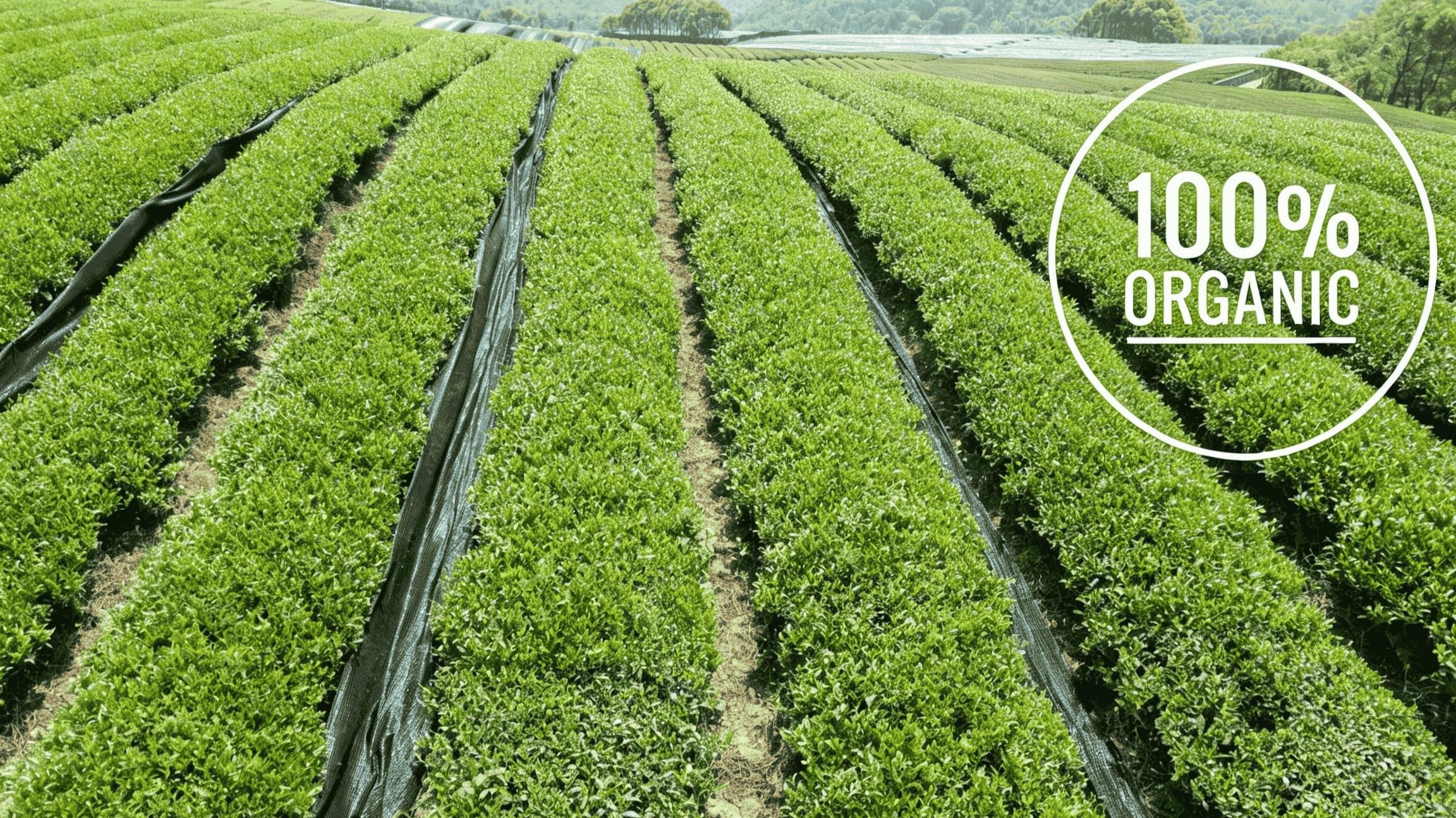
Our ecological practices further cut environmental impact:
Zero-pesticide planting: We use ecological methods instead of chemicals. This protects soil health. Every batch passes 480-item pesticide tests with zero detection.
International organic certifications: We hold JAS, USDA NOP, and ECOCERT Canada. This makes export clearance smoother. End consumers feel more at ease.
Sustainable shading: Some gardens use rice straw from our own paddies for shading. This traditional practice is eco-friendly. It also enriches matcha flavor.
Industry Initiatives in Action
At the 2026 Matcha Conference, the China Tea Marketing Association launched the “China Matcha Industry Collaborative Development Initiative.” As a matcha powder manufacturer, we actively practice what it preaches:
Production: We use zero-pesticide ecological planting. We hold organic certifications for the EU, US, Japan, and more.
ESG development: We build zero-carbon tea gardens and low-carbon facilities. This makes our clients’ supply chains greener.
Processing: We use intelligent tencha processing, ultra-fine grinding, and low-temperature equipment. This ensures consistent quality across batches.
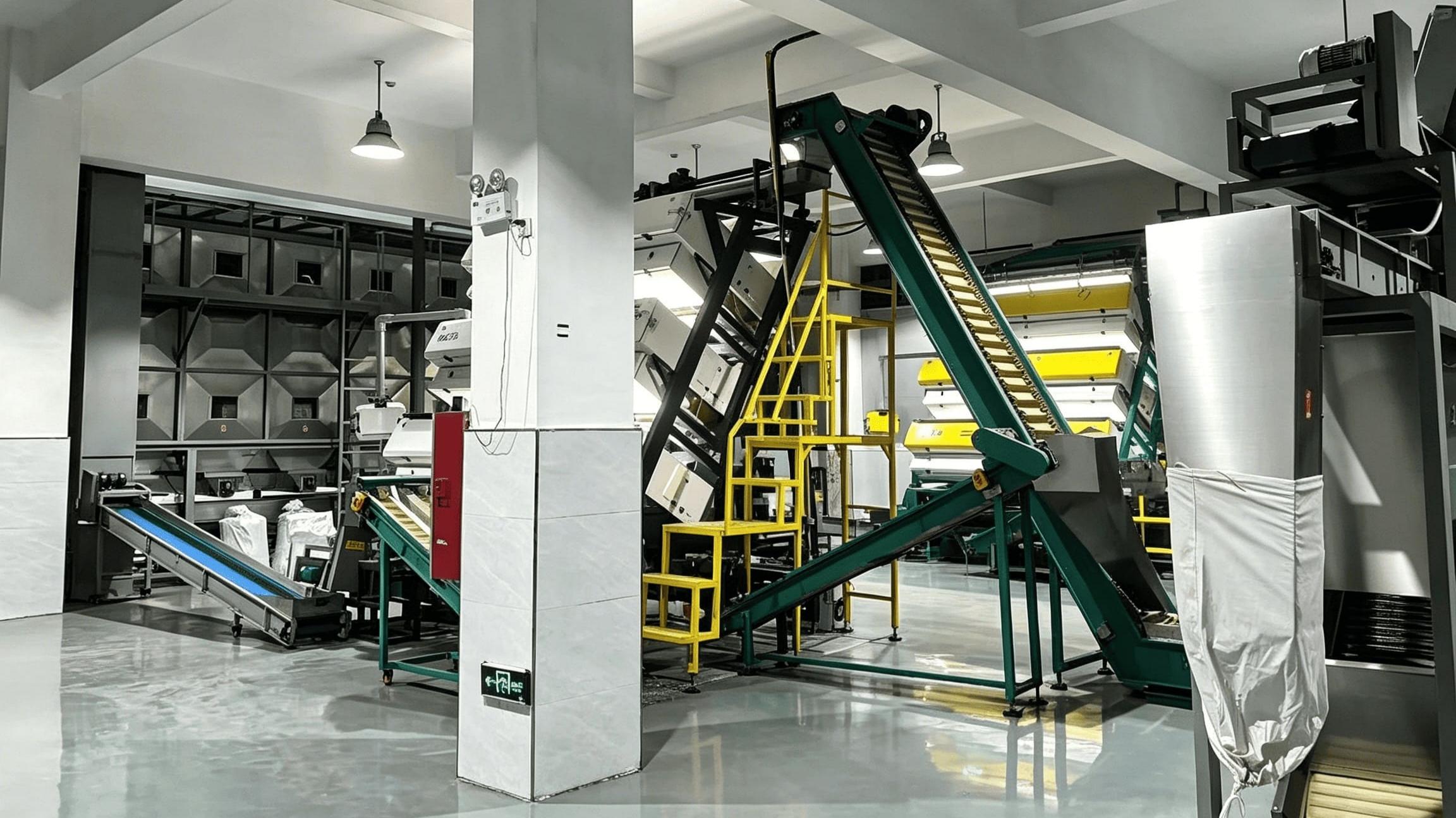
Market: We follow “same quality, same standard” for all markets. Export and domestic products have identical quality.
Supplier Assessment Guide
Does your matcha come from a factory that truly practices sustainability? This affects four areas:
Quality consistency: Sustainable management means precise control across the chain.
Supply reliability: Waste use and summer/autumn tea use mean more raw material reserves.
Compliance safety: Organic certifications and ecological planting are export “passports.”
Brand reputation: Choosing a sustainable supplier shows commitment to your customers.
We offer more than matcha powder. We offer a verifiable quality promise from the source.
Sustainability Is Competitiveness
For us, sustainability is not a cost burden. It is an investment in quality and competitiveness. Waste use and summer/autumn tea use give our matcha better pricing. Water efficiency and ecological planting make our matcha purer and more stable. Organic certifications and ESG commitments make procurement easier and safer.
In B2B procurement, sustainability is moving from “nice-to-have” to “must-have.” Choosing our matcha means choosing a sustainable supply chain and a partner you can trust.
Contact us for samples and sustainability reports. Let our matcha powder speak through quality and data.
#matcha powder #organic matcha green tea powder #bulk matcha powder #matcha powder manufacturer #pure matcha powder #wholesale matcha powder for cafes and bakeries
Leave a Reply