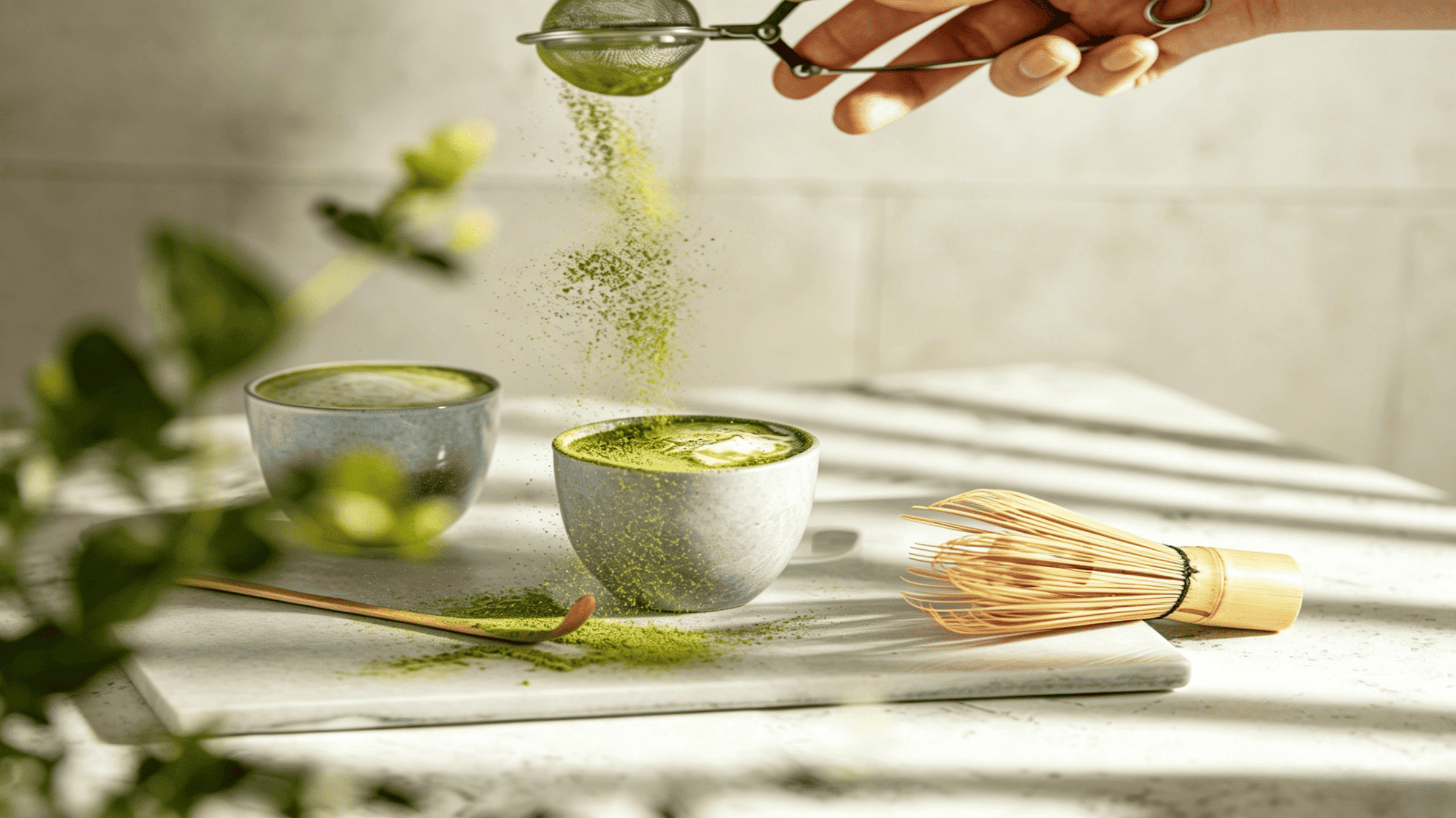
Over the past five years, matcha green tea has become one of the fastest-growing flavors in the global tea market. From boutique bubble tea shops to high-end cafés, pure matcha powder drinks often rank as the highest-priced and most repurchased items on menus. Why? Three clear reasons: natural green color (no artificial dyes needed), antioxidants in pure matcha green tea plus L-theanine for calm alertness, and flavor compatibility (slight bitterness pairs with milk, fruit, soda, and more).
For commercial buyers, using matcha powder is more than “adding a scoop.” You need to know how to identify high quality matcha powder, which grade suits each drink, how to store matcha powder for freshness, and how to control costs without sacrificing quality. This guide covers it all.
Seven Key Applications of Matcha in Tea Drinks
Matcha Milk Tea (Classic)
Base options: Non-dairy creamer masks bitterness (good for value lines); fresh milk highlights true matcha flavor (mid-to-premium).
Suggested ratio (500ml): 3–5g culinary matcha, 200ml milk base, 25–35g syrup, ice.
Commercial tips: Best way to whisk matcha powder without lumps is to pre-dissolve in warm water (60-70°C). Add 0.05% xanthan gum or use ≥1000 mesh matcha to reduce sedimentation.
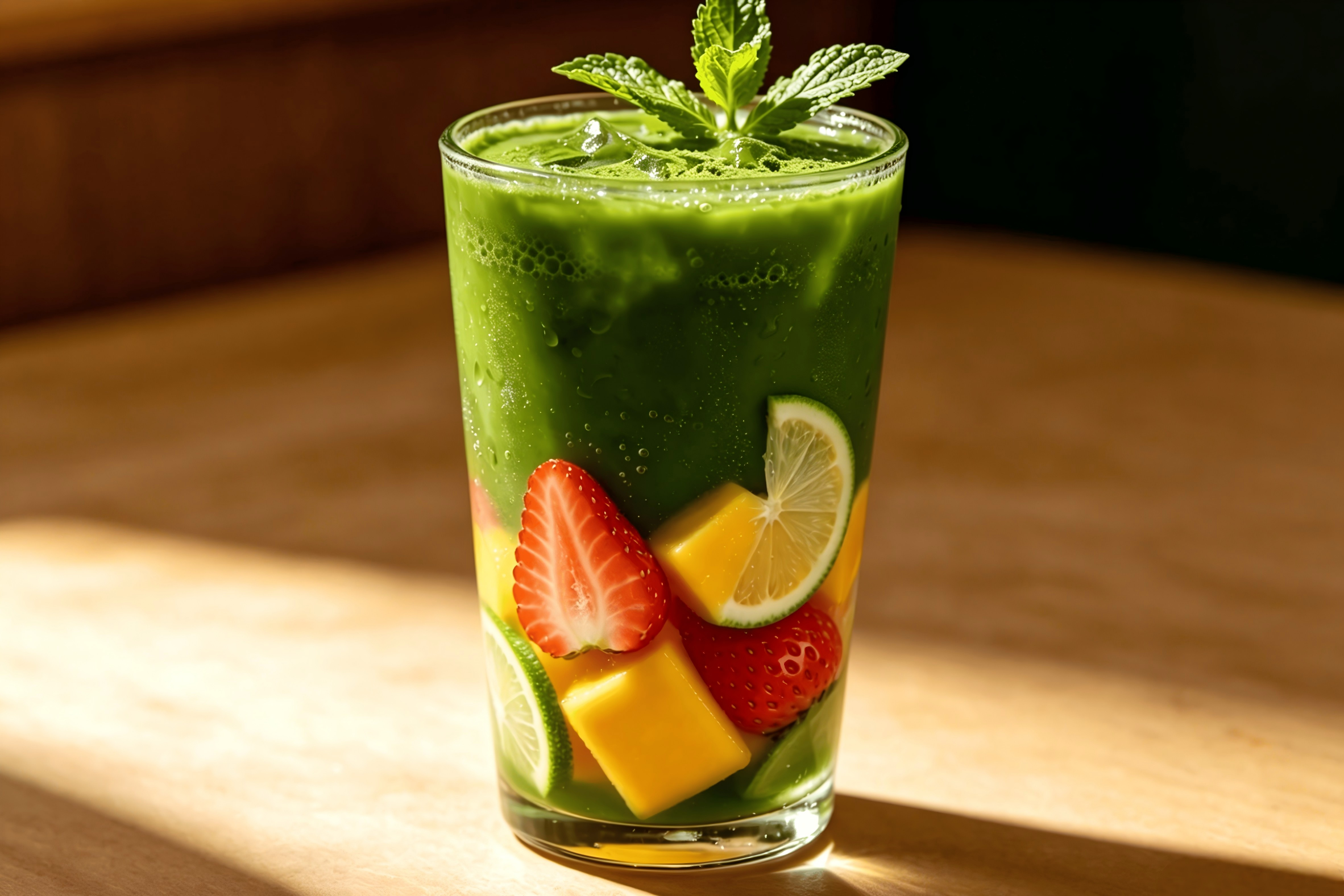
Matcha Fruit Tea
Key challenge: Acidity below pH 4.0 turns matcha yellowish brown and intensifies bitterness.
Solution: Use low-acid fruits (mango, banana, lychee, peach). For lemon or strawberry, add a pinch of baking soda to reach pH ~4.5, or use matcha syrup.
Visual sell: Red-green or yellow-green gradients are highly Instagrammable.
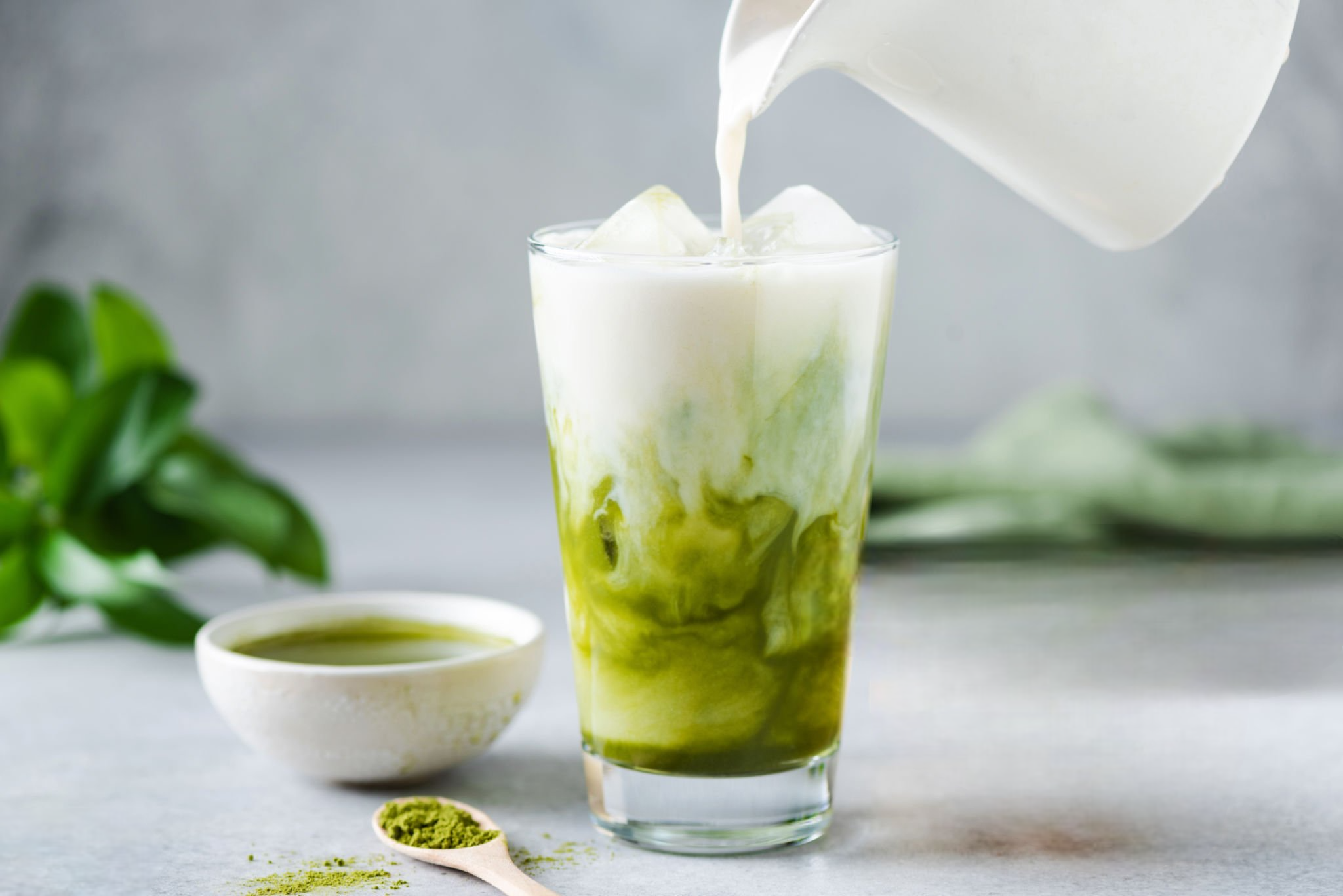
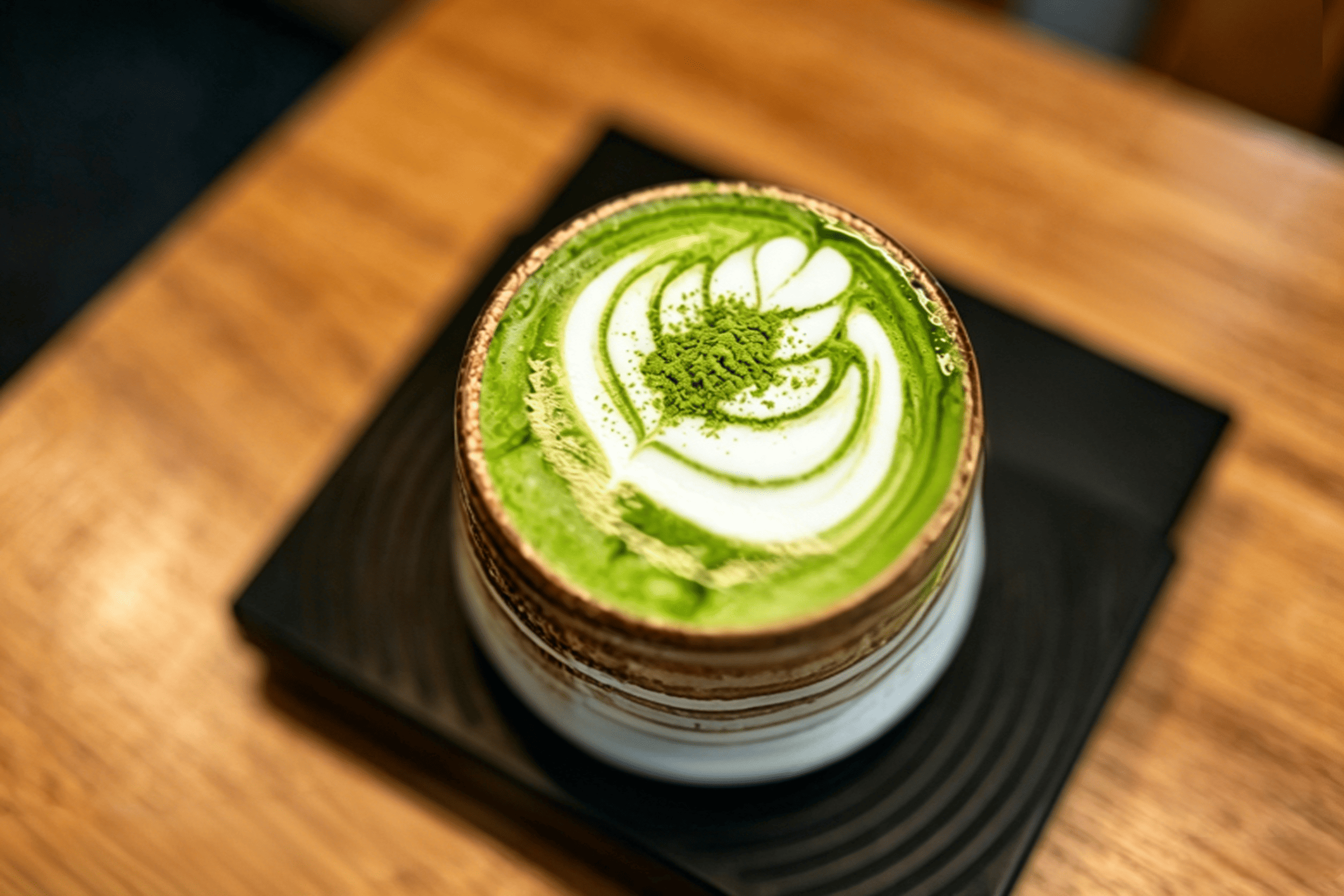
Matcha Latte (Café Essential)
Hot latte: 3g premium matcha tea + 20g hot water paste; heat milk to 65-70°C (never exceed 75°C). Pour over paste, top with foam.
Iced vegan matcha latte: Use oat or almond milk – works perfectly.
Pro tip: Dust organic matcha green tea powder on top for aroma and garnish.
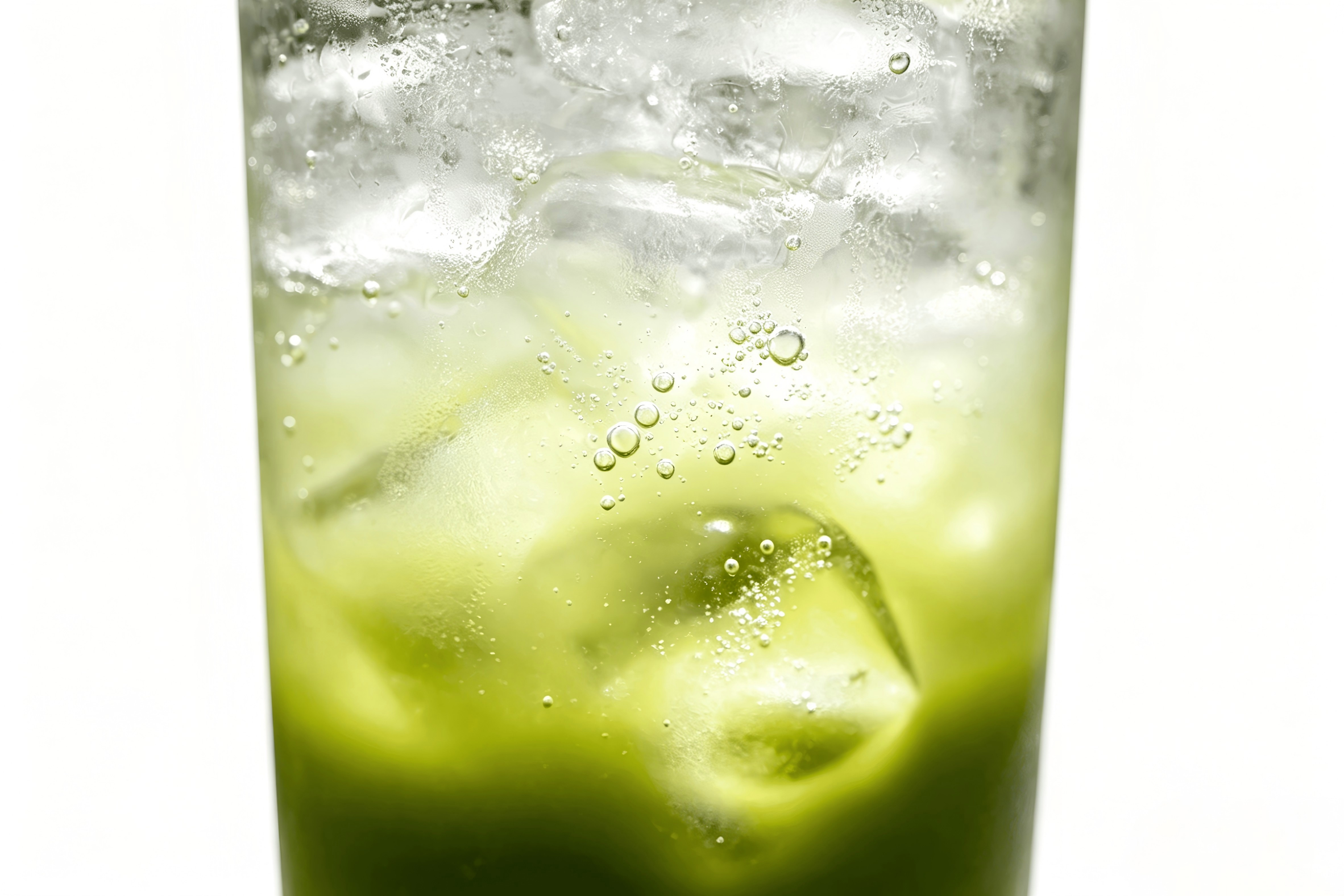
Matcha Sparkling Tea (Summer Hit)
Recipe (350ml): Matcha powder for weight loss and energy – combine paste (3g powder+9g water), 15 20g syrup, 5 10g lemon juice (optional), ice, fill with sparkling water.
Never add dry matcha directly to soda – it will foam and clump. Pre-make a matcha sparkling syrup instead.
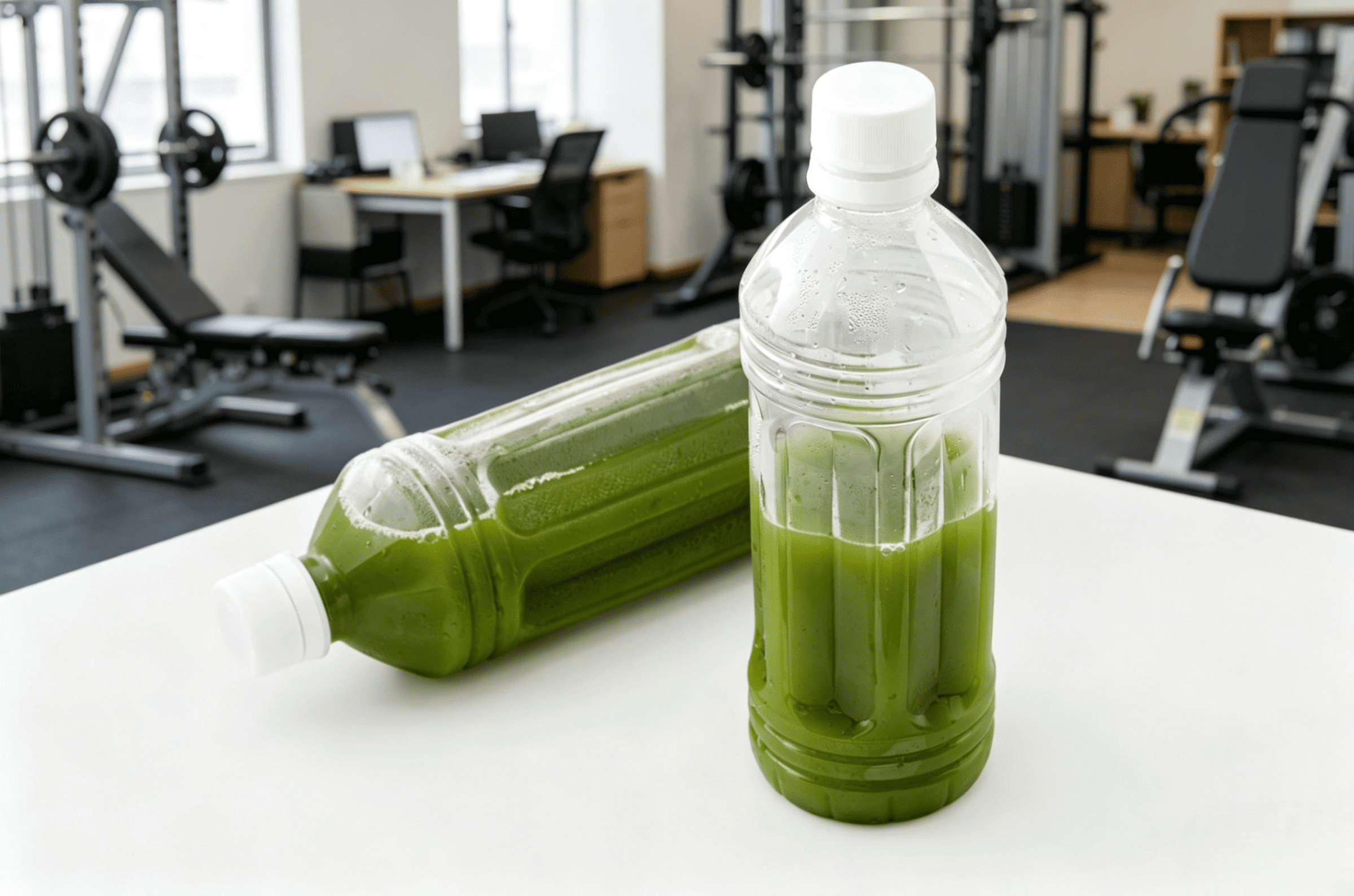
Cold Brew Matcha (Bottled RTD)
Ratio: 1g matcha powder, 500ml cold water (4°C). Shake vigorously, refrigerate 4-8 hours.
Shelf life: Best within 24 hours (color stable); after 48 hours turns yellow. Always check does matcha powder expire or go bad – once opened, use within 2 months.
Commercial upgrade: Add honey or monk fruit for low-sugar version; sell in clear PET bottles.
Matcha as a Tea Base Blend
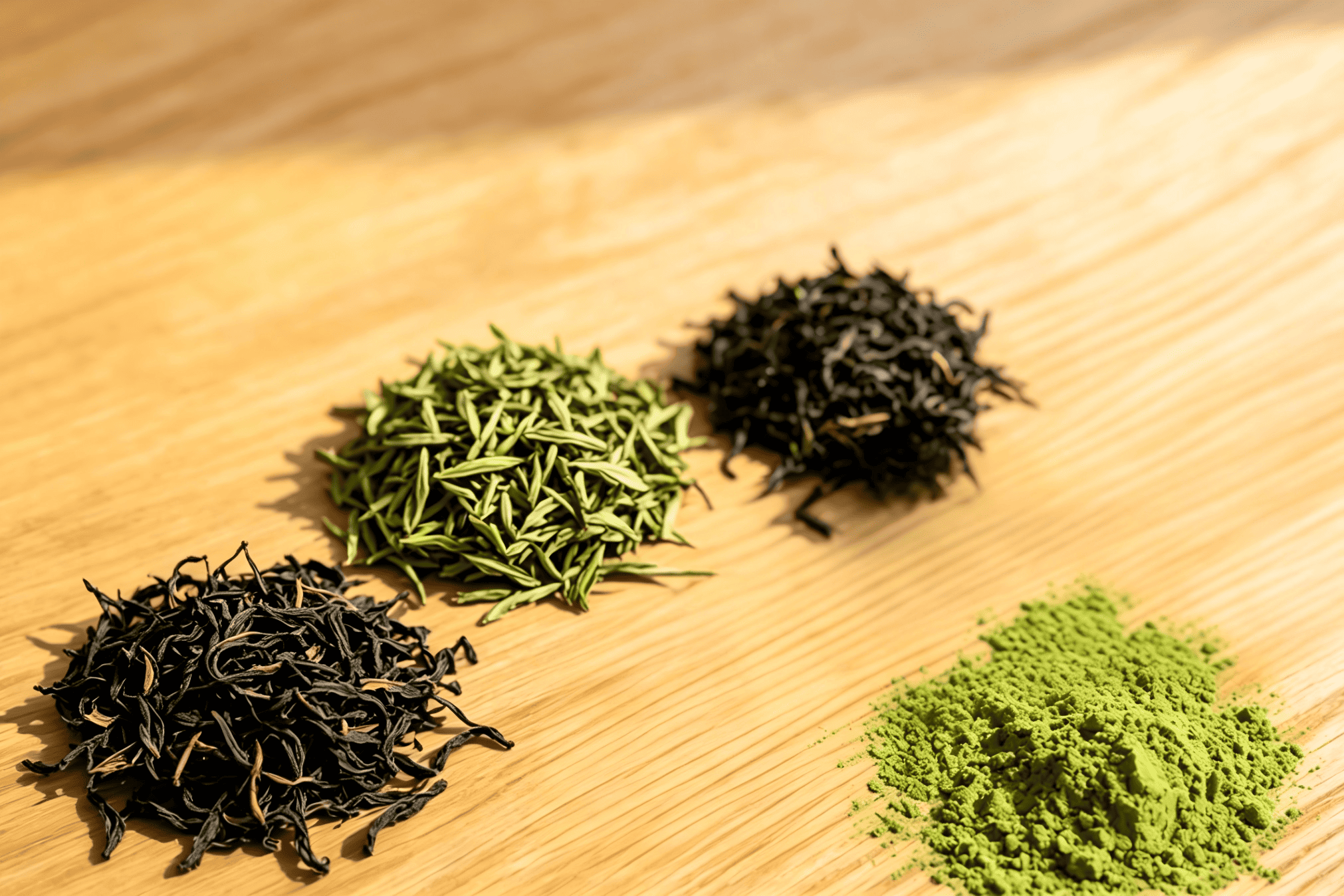
Blend with Assam black tea (1:10) for richer milk tea, with jasmine green tea (1:8) for fruit tea, or with hojicha for double Japanese flavor. Cooking with culinary grade matcha powder is ideal for these blended bases.
Commercial Matcha Powder Selection Guide
Ceremonial grade vs culinary grade matcha powder – here’s how they differ
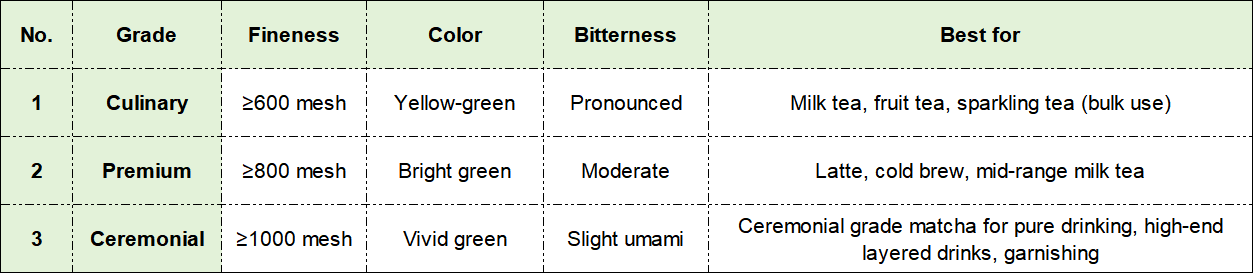
What does authentic matcha powder look like? Vibrant bright green, fine texture, and a fresh grassy aroma. Avoid dull or brownish powder.
Buyer advice: For value milk tea, use 70% culinary + 30% ceremonial (just for garnish). For bottled cold brew, use at least premium grade. If you need bulk matcha powder for cafes and bakeries, we offer matcha powder manufacturer direct price. Always test for E. coli, Salmonella, lead, arsenic, and pesticides. Ask for a sample pack of premium matcha powder before bulk order.
Health Selling Points for Menus
Benefits of drinking matcha powder everyday: High antioxidants (10x more than regular green tea).
Matcha powder for weight loss and energy – natural caffeine provides steady energy without coffee jitters. How matcha powder boosts metabolism is supported by studies on EGCG.
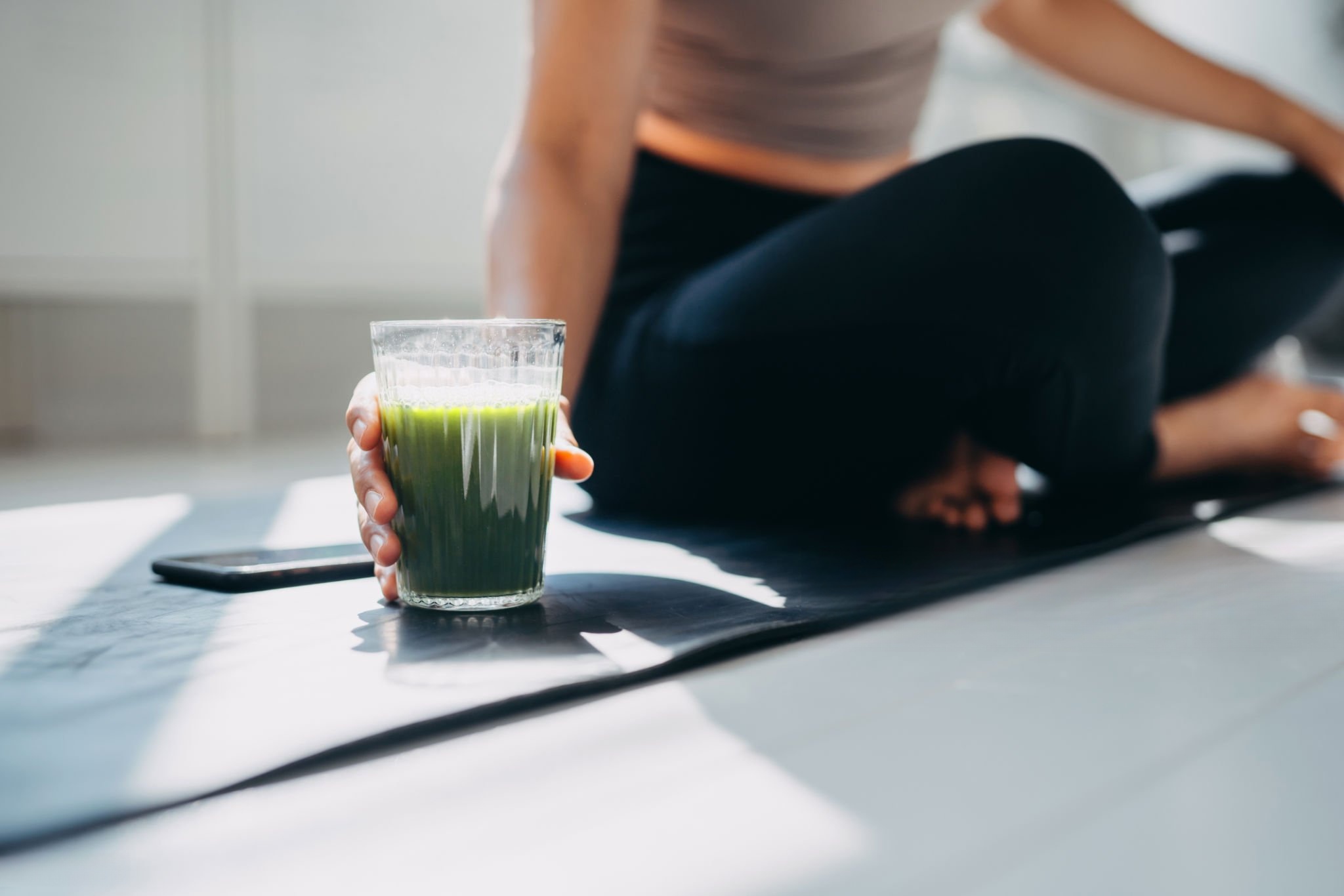
Matcha vs green tea: which is healthier? Matcha contains the whole leaf, so it has higher chlorophyll, fiber, and antioxidants.
Is matcha powder good for skin health? Yes – the anti-inflammatory properties help reduce acne and redness.
Low-sugar friendly: Bitterness works well with erythritol or stevia – perfect for keto friendly matcha powder recipes.
Menu Innovation Ideas
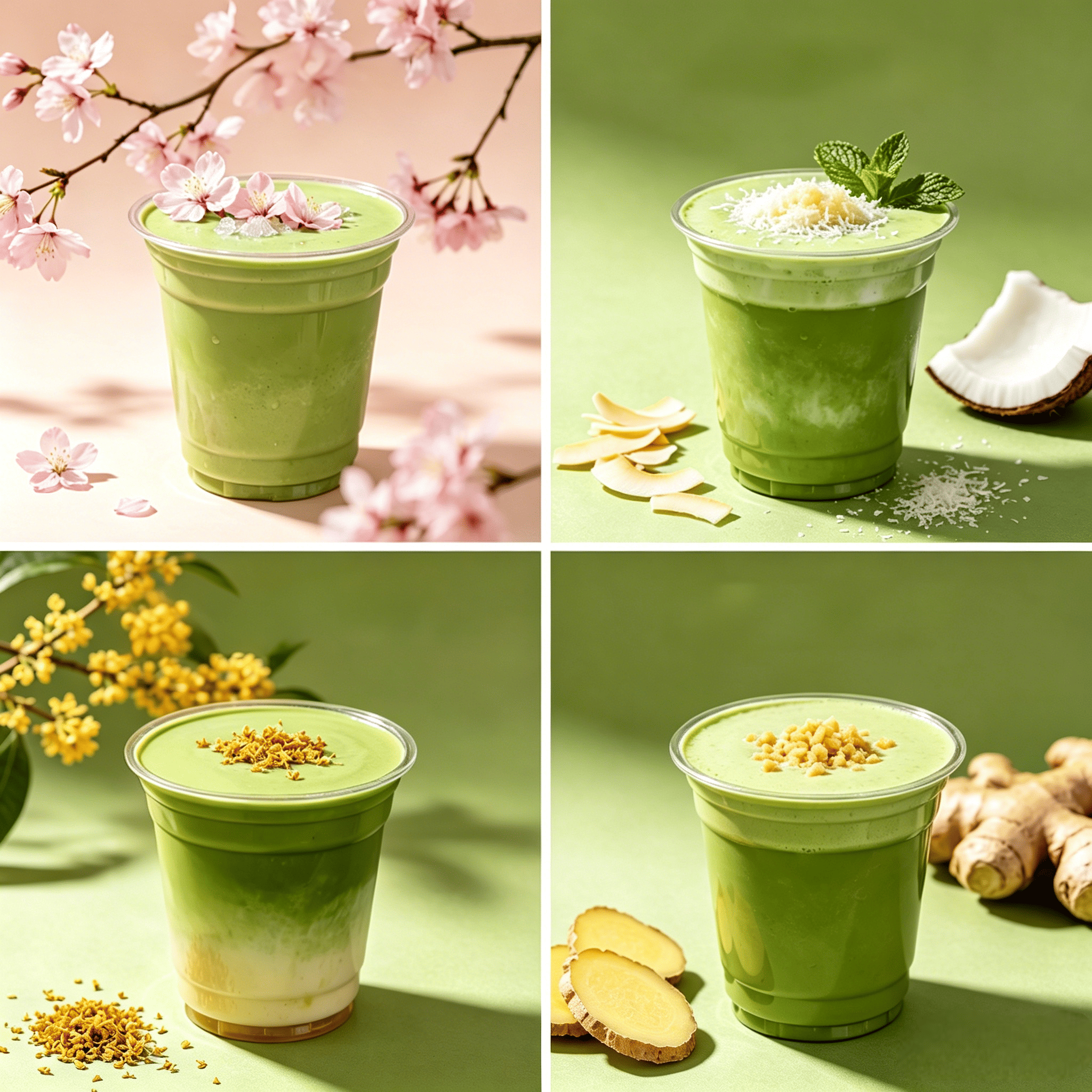
Seasonal: Sakura matcha latte (spring), coconut matcha sparkling (summer), osmanthus matcha milk tea (fall), ginger matcha latte (winter).
Wellness: Matcha kale fruit tea, matcha collagen milk tea.
Alcoholic: Matcha vodka sparkling, matcha Baileys latte.
DIY kits: Single-serve best matcha powder + syrup + tea bag. Great for where to buy pure matcha powder online customers.
FAQ for Commercial Buyers
Q1: My matcha milk tea separates after sitting – what do I do?
A: Add 0.05-0.1% microcrystalline cellulose or gellan gum. Or instruct customers to “shake well before drinking.”
Q2: Why does my matcha latte turn yellowish?
A: Low-grade matcha, water >80°C, or acidic ingredients. Upgrade to premium matcha tea, keep water <70°C, add acids last.
Q3: Can I pre-dissolve matcha paste the day before?
A: Yes – sealed and refrigerated for up to 24 hours. Beyond that, color degrades. Learn how to store matcha powder for freshness – keep in an airtight container away from light and heat.
Q4: How much matcha powder to use per cup?
A: For a standard 12oz (350ml) drink: 2-3g for mild flavor, 4-5g for strong ceremonial style. Can you drink matcha powder with water only? Yes – that’s traditional usucha (thin tea), using 2g ceremonial grade matcha with 70ml hot water.
Q5: Does matcha powder expire or go bad?
A: Yes. Unopened, 12-18 months. Opened, best within 2-3 months. Signs of aging: dull color, stale smell, flat taste.
Conclusion
Matcha in beverages goes far beyond “adding a scoop.” From dissolution techniques to color management and menu creativity, every detail determines your success. As a professional matcha powder manufacturer of organic matcha green tea powder, we provide bulk matcha powder for cafes, bakeries, and beverage brands.
Need a sample pack of premium matcha powder? Whether you want ceremonial grade matcha for high-end lattes or culinary matcha for smoothies and baking, contact us for manufacturer direct pricing and technical support.
#matcha powder #organic matcha green tea powder #ceremonial grade matcha #culinary matcha #ceremonial grade vs culinary grade matcha powder #premium matcha tea
Leave a Reply