In everyday conversation, matcha and green tea powder are often treated as interchangeable terms. Many consumers – and even some food professionals – assume that “matcha is simply powdered green tea.” The truth is far more complex. While both originate from the Camellia sinensis plant, they differ fundamentally at every stage – from cultivation and processing to nutrition and application. We only make one of them, which is why we believe it’s worth clearly explaining the difference.
For brand owners, procurement professionals, and product developers, understanding these distinctions is not academic – it directly impacts your costs, product quality, and ultimately, your customers’ experience.
Cultivation: Shade-Grown vs. Sun-Grown
This is the most fundamental difference.
Matcha is grown under shade cultivation. Tea plants are covered for 20 to 30 days before harvest. Shading alters the plant’s metabolism – chlorophyll and L-theanine accumulate, while polyphenols (the source of bitterness) are suppressed. This is the primary source of matcha’s signature umami and what sets it apart from every other tea powder.
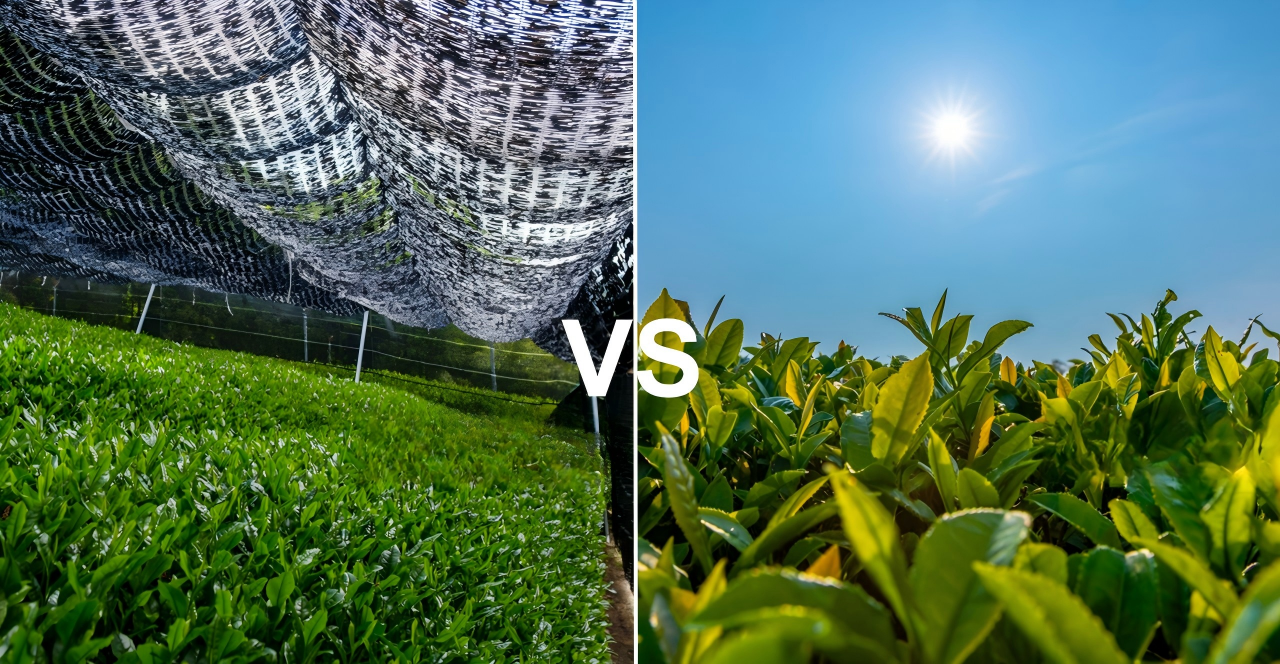
Green tea powder, by contrast, comes from plants grown in full sunlight. This leads to higher polyphenol content, duller leaf color, and more pronounced bitterness.
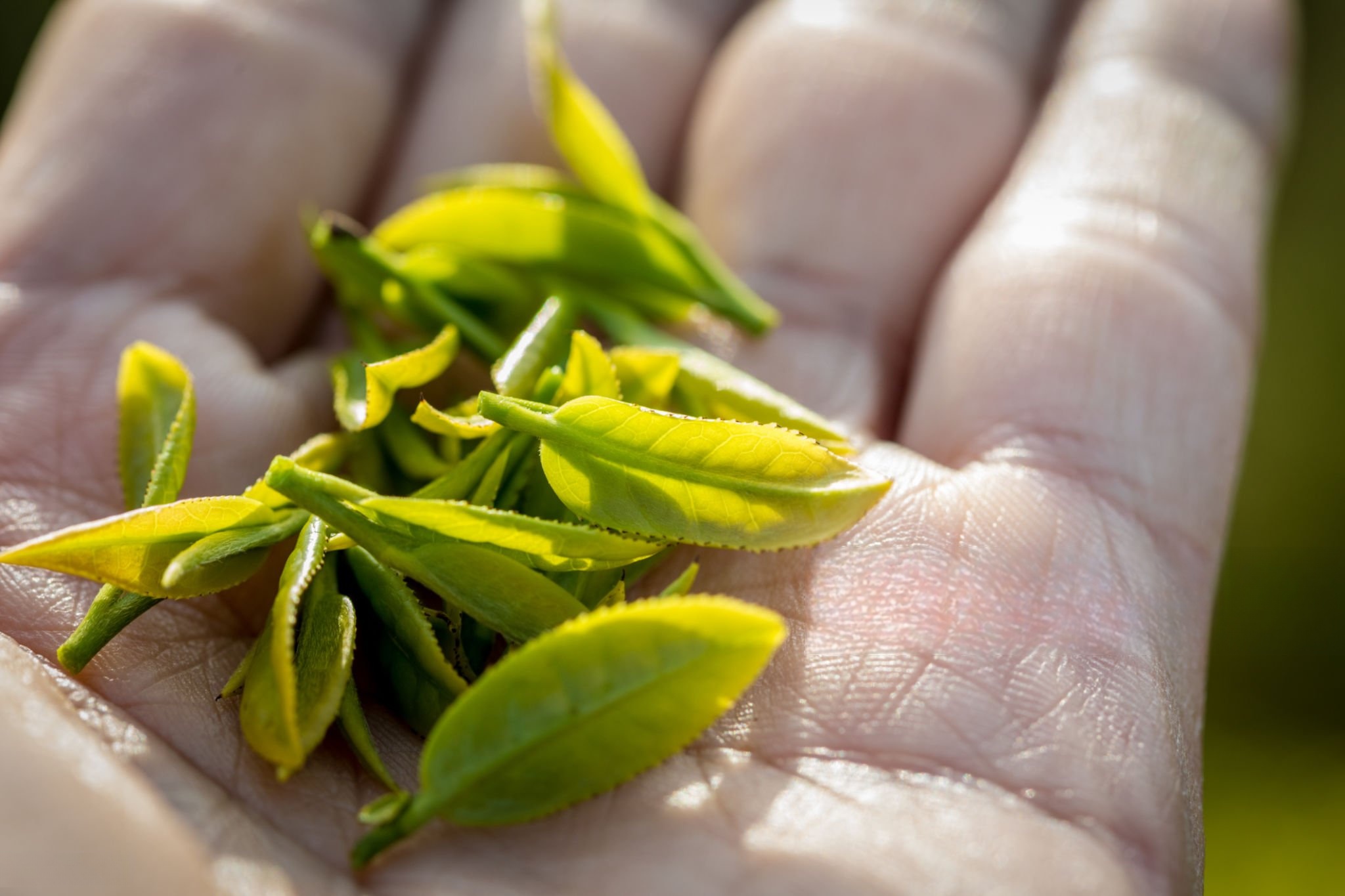
In short: Matcha is “shaded into sweetness”; green tea powder is “sun-baked into bitterness.”
De-Stemmed & Stone-Ground vs. Whole-Plant Pulverized
Matcha has two key processing steps that green tea powder does not:
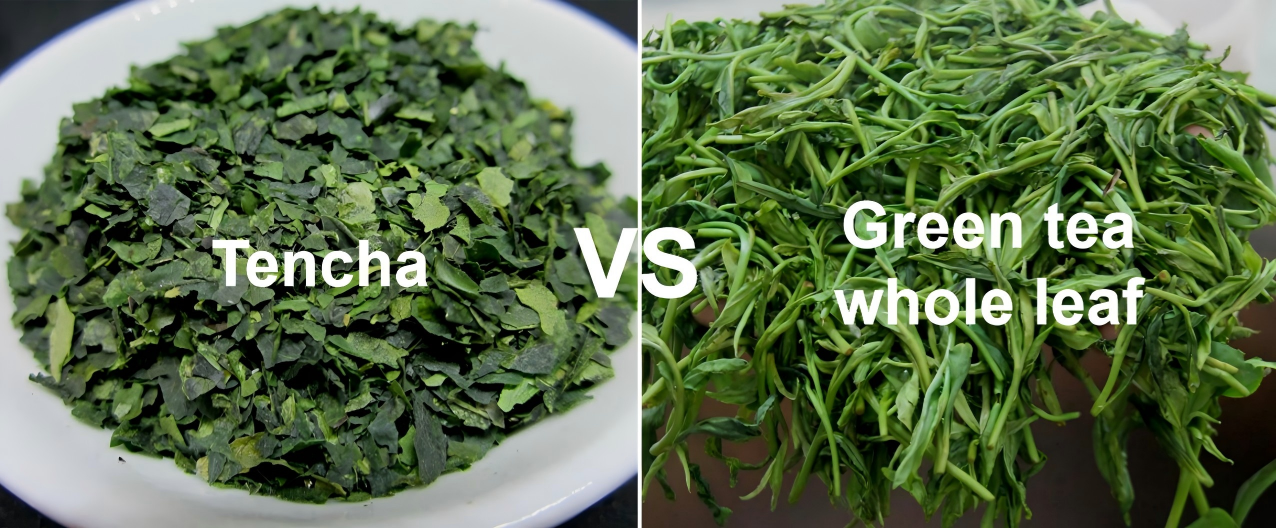
First, de-stemming and de-veining. Matcha retains only the leaf tissue – stems and veins are completely removed after drying. This step determines the purity and fineness of the final powder. Green tea powder is whole-plant pulverized – stems, veins, and leaves all ground together, which introduces coarseness and impurities.
Second, stone grinding. Matcha uses traditional granite stone mills operating at low speed and low temperature, producing exceptionally fine, flake-like particles that suspend evenly in liquid. Green tea powder is pulverized using high-speed jet mills or ball mills, producing coarse, irregular particles.
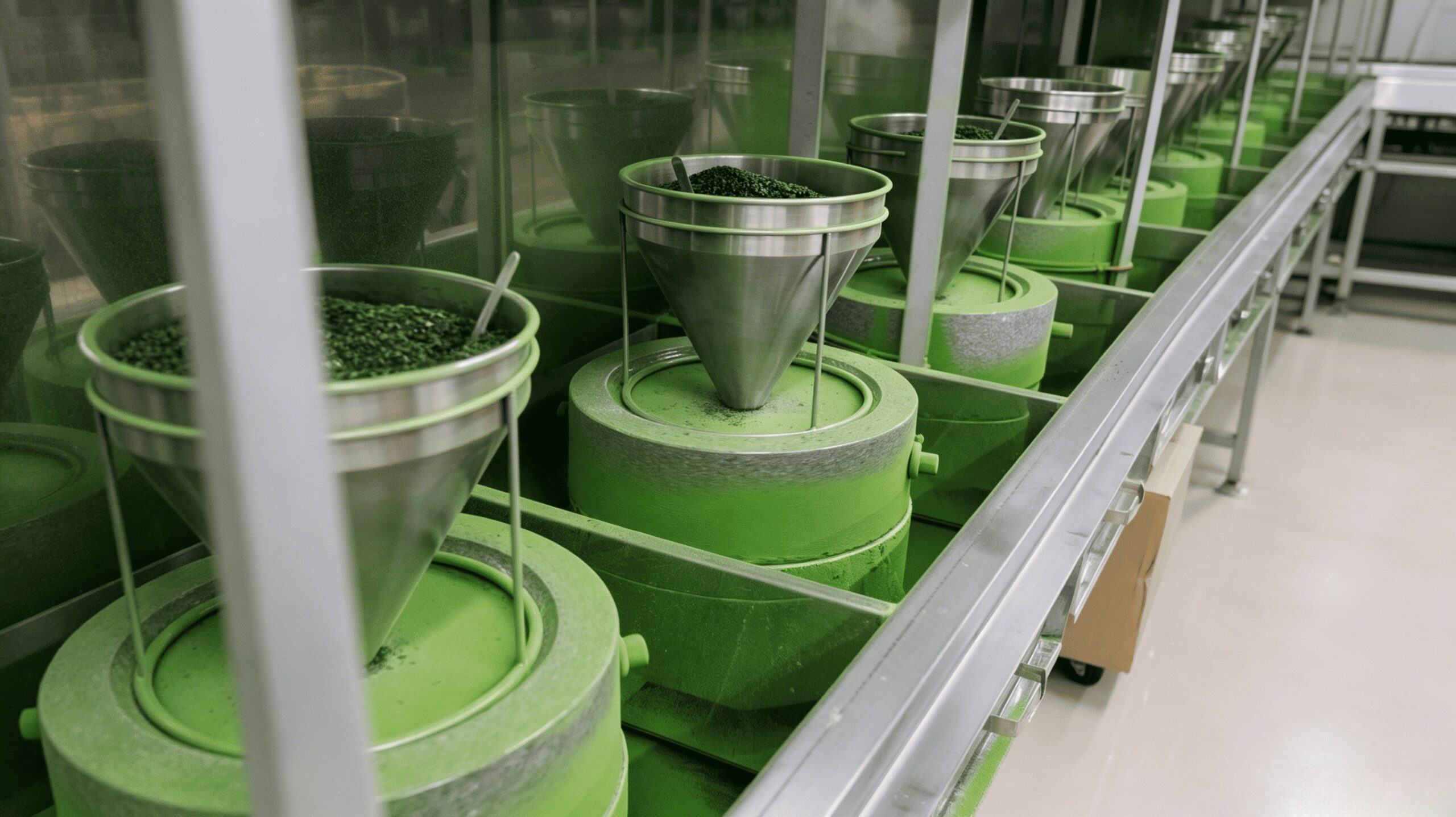
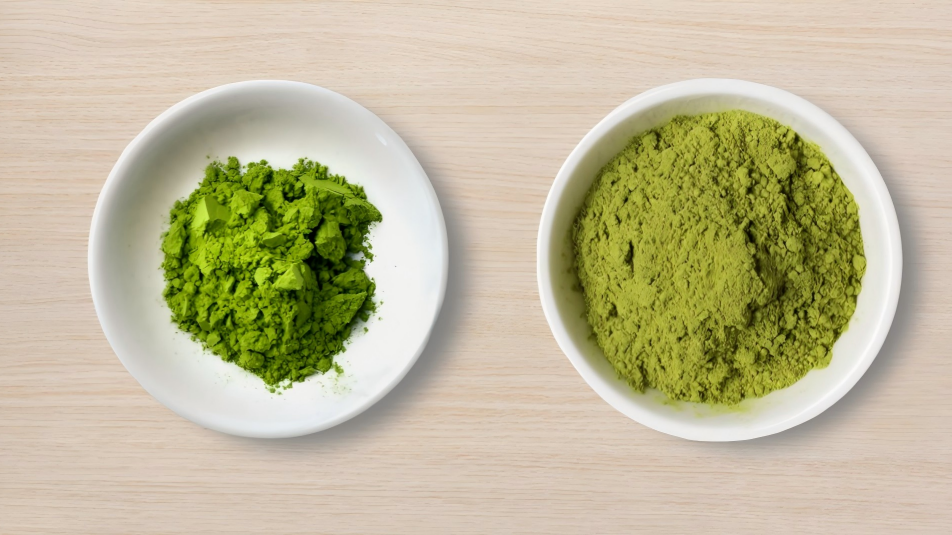
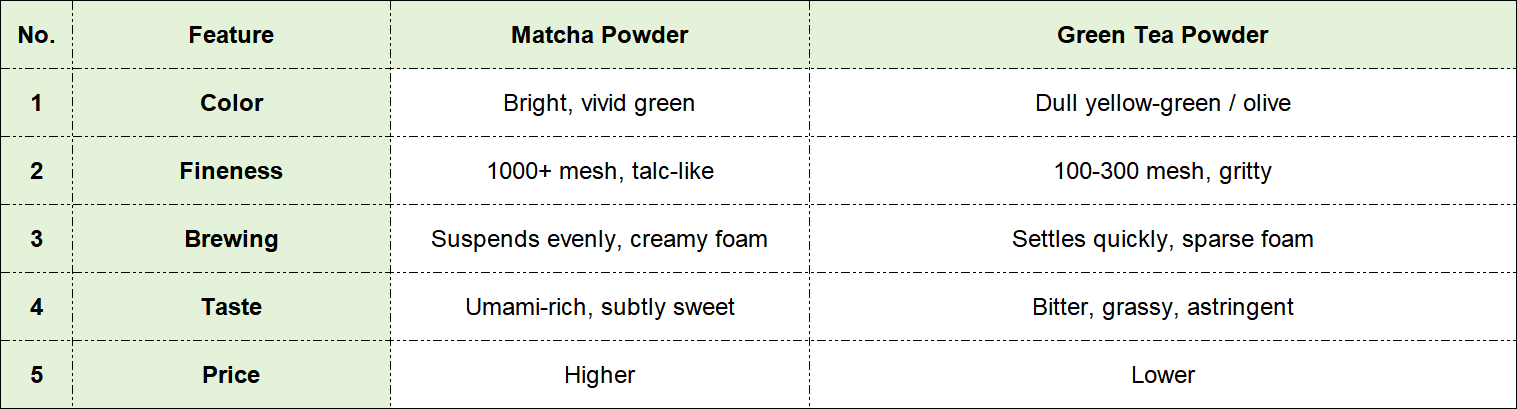
Fineness is a critical differentiator: Matcha reaches over 1000 mesh, feeling like talc. Regular green tea powder is only 100 to 300 mesh – coarse enough to feel gritty when brewed. No one wants a “gritty” matcha latte.
Sensory: Vibrant Green vs. Dull Olive
Color: Matcha’s high chlorophyll content gives it a brilliant, vivid green hue. Green tea powder appears duller, leaning toward yellowish-green or olive. For baking and beverages, color drives visual appeal – and visual appeal often drives purchase decisions.
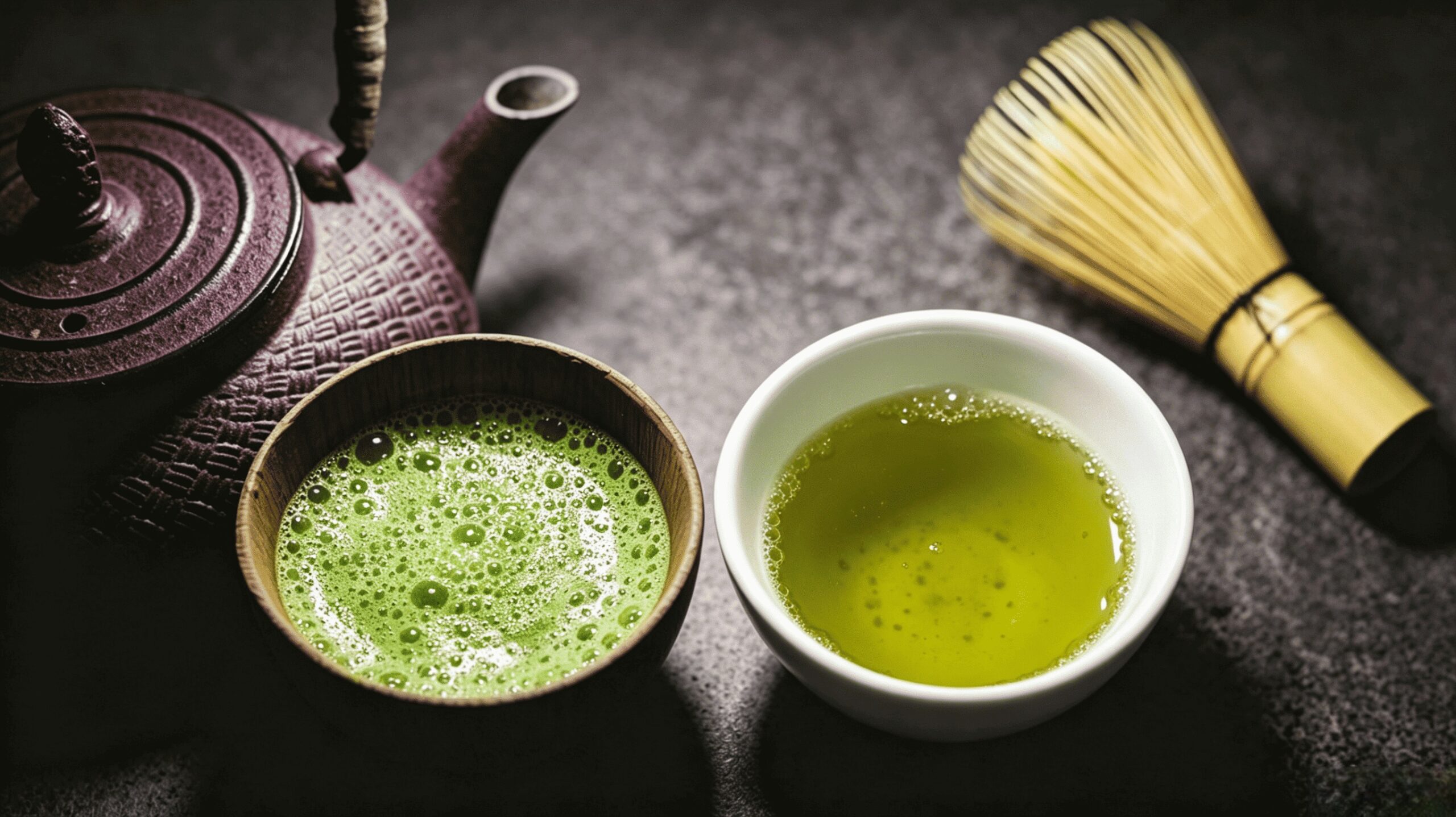
Taste: Matcha is rich in L-theanine, delivering pronounced umami, a smooth mouthfeel, and subtle sweetness. Green tea powder is more bitter and grassy, lacking matcha’s complexity. This is not a matter of preference – these are fundamentally different taste experiences.
Texture: Matcha is talc-fine and suspends evenly in liquid. Green tea powder is coarse and tends to settle quickly when brewed.
Nutrition: Concentrated vs. Diluted
Matcha’s nutritional density far exceeds green tea powder – because you consume the entire leaf.
Caffeine: Matcha contains 18.9 to 44.4 mg per gram; green tea powder contains 11.3 to 24.67 mg. A cup of matcha (approx. 2g powder) delivers 37.8 to 88.8 mg of caffeine, while regular green tea provides only about 29 mg.
L-Theanine: Matcha contains 9.30 to 28.51 mg per gram; green tea powder contains only about 6.56 mg. Theanine works synergistically with caffeine to produce a state of calm alertness – focused yet relaxed. This is a key reason why matcha continues to gain traction in the health beverage market.
Antioxidants: Matcha’s EGCG content can be up to 137 times higher than that of regular green tea. Chlorophyll-a content exceeds 250mg/100g dry weight in matcha, while regular green tea powders fall far below.
For brand owners, this means products made with matcha can carry a legitimate antioxidant advantage – a tangible selling point on your label.
Applications: Know What to Use
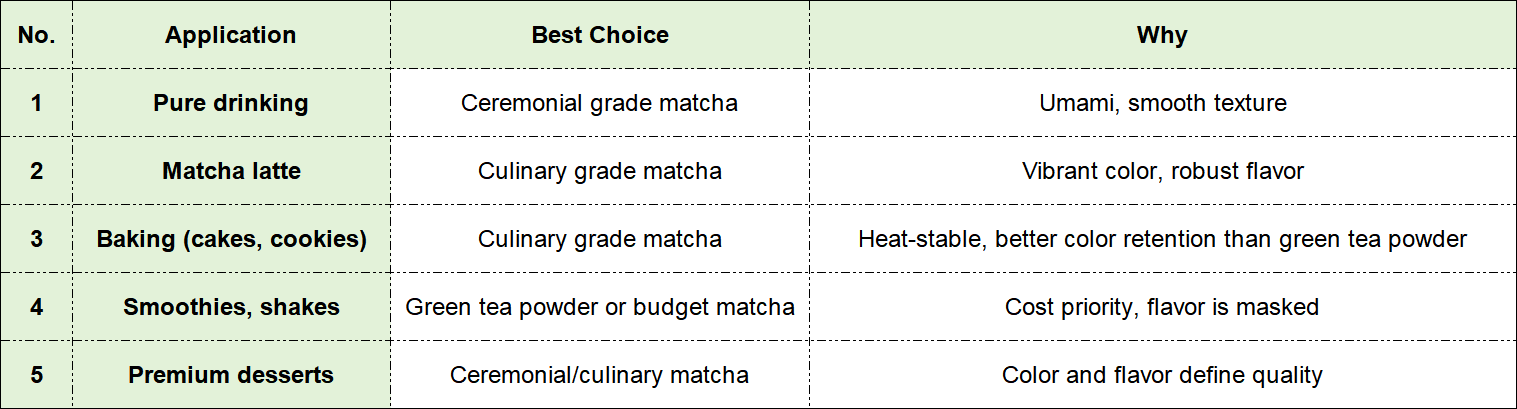
Key takeaway: Green tea powder cannot replace matcha – especially in premium products. Matcha’s color, umami, and suspension properties are unique. Choosing the right ingredient directly affects your final product quality.
How to Tell Them Apart – At a Glance
Why We Only Make Matcha Powder
Once you understand these differences, the choice becomes clear – our factory focuses exclusively on matcha powder cultivation and processing.
From shaded cultivation to stone grinding, from de-stemming to batch-by-batch particle size testing, we do it all for one reason: to ensure that every gram of our matcha powder delivers the quality your products deserve.
If you’re sourcing matcha powder for your brand, your tea chain, or your food production line, we would be happy to send you samples – so you can compare, taste, and test for yourself. We have confidence in our quality – and we encourage you to verify it firsthand.
#matcha powder #matcha vs green tea #ceremonial grade matcha #organic matcha green tea powder #where to buy matcha powder #matcha powder manufacturer
Leave a Reply